



Home » Unused Medicines Return and Disposal
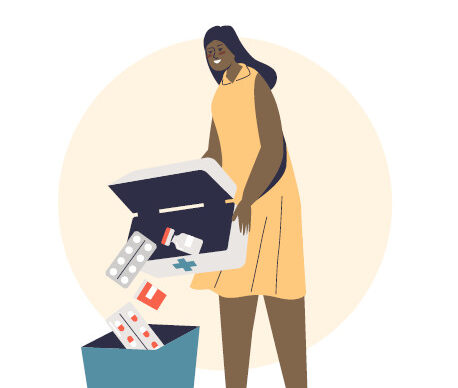
During the discussions that were held in relation to the CPA 25 it was highlighted that Ireland is currently out of line with many developed health systems with no national programme to support the safe disposal of unused medicines. Having a system of collection for expired medicines has been required under EU law since 2004 (2004/27/EC). Improperly disposing of medicines impacts on crops, biodiversity and contaminates our water system. One of the most pressing health challenges of our time is antimicrobial resistance and every antibiotic incorrectly disposed of adds to this problem. The Environmental Protection Agency too has set out the establishment of a nationwide system as a key recommendation in its National Hazardous Waste Management Plan.
Traditionally community pharmacists have facilitated patients in returning unused medication to their pharmacy either on a good will basis, or in some cases on a paid for service basis. Additionally, there have been certain local or regional initiatives, which aim to raise awareness among members of the public regarding appropriate ways to dispose of unused medicines and to encourage them to return their unused medication to their local pharmacies. These initiatives have been funded by the HSE on a time bound basis in certain areas but to date no national programme has been established.
Enabling patients to return their unused medicines to their local community pharmacy restricts access to unused medicines, thereby reducing the risk of suicide, self-harm and accidental poisoning in children. Ireland’s Connecting for Life: Ireland’s National Strategy to Reduce Suicide 2015-2024 and the National Drug Strategy: Reducing Harm and Supporting Recovery 2017-2025, highlight this need to reduce the availability of medicines which can be used for these purposes. The most effective way to prevent the problems associated with unused or expired medicines in the community is to reduce the quantities of these medicines in circulation within the community.
Within the HSE circular relating to the Unused Medicines Return and Disposal service the operational aspects are outlined.
The HSE has appointed Stericycle to deliver the service. Pharmacies are being contacted directly by Stericycle to set up a ‘HSE Returned Medicines’ (public) account and arrange delivery of bins. Pharmacies may wish to discuss their requirements for their private contract currently in place with Stericycle as these may change on introduction of this publicly funded service. Each pharmacy will receive two 60 litre bins, in advance of service commencement. This is taking place over a number of weeks due to the large number of pharmacies nationwide.
The proposed collection schedule will involve monthly collections for the first three months, followed by collections every second month for the subsequent six months. Pharmacies can order additional bins during a cycle; these will be delivered directly to the pharmacy by a courier. There are no costs associated with ordering additional bins. The courier cannot collect full bins at the time of bin delivery; these bins will be collected as per the planned schedule. The service will be evaluated after nine months, with collection frequency subject to review.
As part of the operation and governance arrangements for the service, the HSE will retain documentation of the waste management company’s facility authorisation licence and waste collection permit. Certificates of Destruction will be provided directly to pharmacies to facilitate compliance with each pharmacy’s requirement to retain records of individual waste collections, in line with PSI Guidelines on the Disposal of Medicinal Products for a Retail Pharmacy Business.
There has been a dedicated contact appointment within Stericycle to support pharmacies with any queries they may have. They can be contacted at serviceireland@stericycle.com. ‘HSE Returned Medicines’ should be included in the subject line of the email.
The service will cover unused, unwanted, out-of-date or left-over medication, including prescription medicines, over the counter (OTC) medicines, general sales list medicines including paracetamol, throat lozenges, etc, certain veterinary medicines (i.e. only those for small companion animals / pets like cats and dogs), as well as cytotoxic and cytostatic medications, and controlled drugs having been first made unidentifiable and unusable by the pharmacy, with appropriate witnessing and recording, in line with PSI Guidelines.
The service does not include items such as outer cardboard and paper packaging, sharps or injectable medication, veterinary medicines for large animals (for example, farm animals), non-medication chemicals or clinical waste. There is an expectation on patients to return the correct medicines in the correct way. Pharmacies can ask the patient to take back items if they are not suitable for disposal and/or presented in the right way.
A public awareness campaign has been devised by the Department of Health (DoH) and will commence once all pharmacies have been onboarded by Stericycle and have received their bins. The aim of the campaign is to support patients with understanding what medicines are suitable for inclusion within this service.
Branding, including a logo, have also been developed by the DoH. Community pharmacies are required to utilise this uniform branding and nomenclature to ensure standardisation and identity of the service. Pharmacies may insert local branding in-line with provided guidelines. Leaflets and posters are available to order from healthpromotion.ie. A partner pack is also being provided for use across pharmacy digital platforms.
Additionally, the DoH has developed a gov.ie page with inclusions/exclusions for this service clearly outlined. They will also provide information to the public on how to safely dispose of different types of waste that are not appropriate to be included within this scheme. Further information regarding all of these resources will be made available once finalised.
The IPU has developed an Unused Medicines Return and Disposal Hub. Members will find the most up-to-date information available here including the HSE circular. We will keep members updated through the IPU eNewsletter and WhatsApp channel.
Disclaimer: Information correct as at time of printing.
Susan O’Donnell

Professional Services Pharmacist, IPU
Highlighted Articles