




Learning objectives
After reading this article, pharmacists should be able to:
Menopause is a physiological life stage characterised by loss of ovarian follicular function and declining oestrogen concentrations. Natural menopause usually progresses over several years. Oestrogen also plays an important role in maintaining bone and heart health as well as brain function during the reproductive years. Natural onset usually occurs between 45 and 55 years of age but it may be earlier. There can be ethnic differences in age of onset. The average age in Ireland is 51.
Although vasomotor symptoms such as hot flushes and night sweats are commonly recognised, the menopause transition may be associated with a broad range of physical and psychological symptoms. These include sleep disturbance, mood changes, cognitive symptoms, genitourinary symptoms, sexual difficulties, and joint and muscle pain. The nature, severity and duration of symptoms vary considerably between individuals and may have a significant effect on quality of life, relationships and occupational functioning. Recognition can be challenging, particularly during perimenopause when symptoms may fluctuate and menstrual cycles may still occur. The 2025 Healthy Ireland Survey found that 84% of women who are currently going through or have gone through menopause said they experienced symptoms. Of these, 13% reported that their symptoms are severe and significantly impacted their life, 33% felt they had/have a moderate impact on their life, and 38% reported that their symptoms are mild and had a mild impact on their life.
Community pharmacists are well placed to identify possible menopausal symptoms, provide evidence-based information on treatment and support medicines optimisation. Patients may also seek advice regarding individual symptoms without recognising a potential association with menopause. This is particularly relevant as the International Menopause Society (IMS) has selected ‘Chronic Pain at Midlife: From recognition to evidence-based care’ as the theme for World Menopause Day 2026. The theme highlights the need to consider pain within the wider health context of midlife while avoiding inappropriate attribution of persistent pain solely to menopause.
Perimenopause refers to the period preceding menopause during which changes in ovarian function may result in menstrual irregularity and menopausal symptoms. Natural menopause is a retrospective diagnosis as it can only be made after a full year without periods above the age of 50 or two years without if under 50. Menopause can occur due to other causes such as surgical (ooperectomy), chemical such as medication or radiation induced menopause.
In otherwise healthy individuals aged 45 years and over who have typical symptoms, perimenopause and menopause can generally be identified clinically without laboratory testing. Routine measurement of follicle-stimulating hormone (FSH), oestradiol or other ovarian reserve markers is not useful in diagnosing the menopause over the age of 45, as the level of FSH can fluctuate from one month to another and may not give an accurate assessment. FSH should be assessed in those under 40 who are suspected of having premature ovarian insufficiency (POI), with menopausal symptoms and two blood samples taken four to six weeks apart. When early menopause is suspected in people between the ages of 40 and 45, FSH may be helpful in diagnosing perimenopause while also considering other indicators including symptoms and cycle alteration. One test might not be sufficient to make a diagnosis.
Menopausal symptoms can be categorised as vasomotor (for example, hot flushes, night sweats), somatic (for example, fatigue, head and body aches and chronic pain), psychological (for example, anxiety, low mood, memory and concentration issues), and sexual (for example, low libido and vaginal dryness). Vasomotor symptoms are often considered the main symptoms of menopause: they are among the most characteristic common symptoms experienced by 70 to 80% of patients, and are the most common symptoms discussed by women with a healthcare professional. Genitourinary syndrome of menopause encompasses symptoms associated with oestrogen deficiency affecting the vulva, vagina, bladder and urethra. Patients may report vaginal dryness, irritation, dyspareunia and urinary symptoms. Unlike some vasomotor symptoms, genitourinary symptoms may persist or progress without treatment. Although menopause affects women almost universally, each person’s experience of it can be highly different. Some people view it as a normal and even powerful time of life, but others experience severe emotional, physical, and social upheaval that negatively affects their wellbeing and quality of life. Pharmacists can support patients to make informed, individual decisions about menopause management, and have an important role in symptom recognition, provision of evidence-based information, Hormone Replacement Therapy (HRT) counselling, medicines optimisation and the identification of patients requiring further assessment.
Management should be individualised according to symptoms, medical history, risk factors and patient preferences. There should be a holistic and individualised approach, always with reference to lifestyle advice and diet modification. This provides an opportunity to discuss the benefits and risks of management options including HRT and alternative therapies. Pharmacists have a key role to play in supporting patients through this transitional phase providing evidence based, informed and empathetic menopause care.
A lifestyle medicine approach encompassing the six pillars of healthy eating, physical activity, mental wellbeing and stress management, avoidance of risky substances, good quality sleep and healthy relationships offers a promising non-pharmacological strategy to optimise health during this period. Regular physical activity should be encouraged, incorporating aerobic, resistance and weight-bearing exercise to support cardiovascular, musculoskeletal and bone health, all of which are associated with declining oestrogen. Smoking cessation, moderation of alcohol intake, a balanced diet and maintenance of a healthy weight form part of general midlife health promotion. Sleep strategies may also be beneficial where sleep disturbance is problematic. Embracing a lifestyle medicine approach has been shown strategy to improve menopausal symptomatology, reduce chronic disease risk and enhance quality of life.
HRT can be an effective treatment for menopausal symptoms, particularly vasomotor symptoms, and should be offered as first line to clinically suitable patients. When HRT is considered as a possible treatment it is important to talk through with the patient about the benefits and risks associated with combined HRT versus oestrogen-only, transdermal versus oral preparations, types of oestrogen and progestogen, sequential versus continuous combined HRT and dose and duration.
The presence or absence of a uterus is central to HRT selection. Following total hysterectomy, oestrogen-only HRT can generally be used. Patients with an intact uterus receiving systemic oestrogen require adequate progestogen to protect against endometrial hyperplasia and cancer.
Combined HRT may be administered sequentially or continuously. Sequential regimens are generally used during perimenopause or when periods have occurred relatively recently, with progestogen administered cyclically and withdrawal bleeding expected. Continuous combined HRT provides oestrogen and progestogen continuously and is generally used following menopause with the aim of achieving a bleed-free regimen. Systemic oestrogen is available orally and transdermally. Route of administration is clinically relevant because oral and transdermal preparations differ in thrombotic risk. Transdermal rather than oral HRT is preferable for people with menopause-associated symptoms who are at increased risk of venous thromboembolism (VTE) or cardiovascular disease, including those with a body mass index (BMI) over 30 kg/m.
Image 1: Systemic HRT
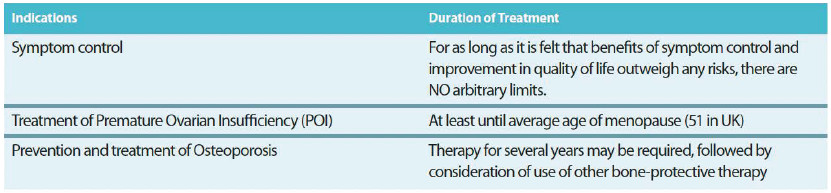
Source: BMS Tool for Clinicians HRT — Guide
Image 2: Systemic HRT treatment
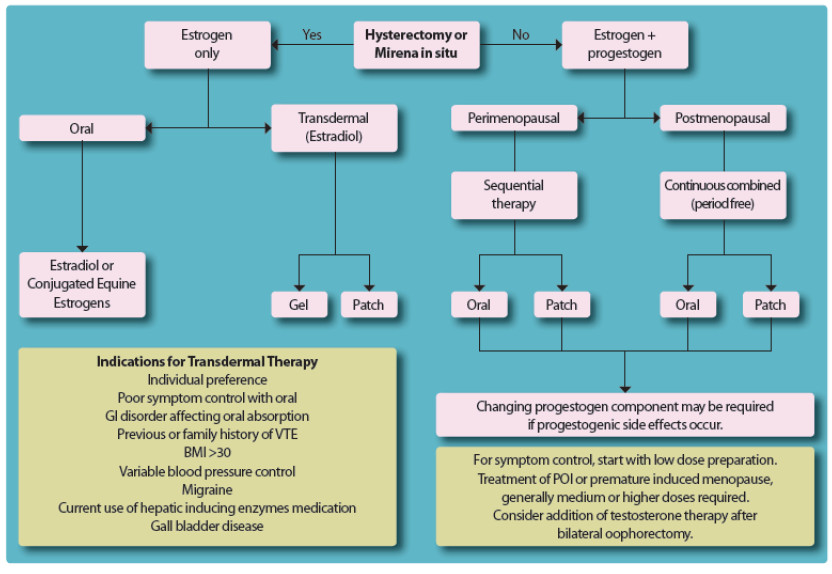
Source: BMS Tool for Clinicians HRT — Guide
For genitourinary symptoms, long-term vaginal oestrogen should be offered even if taking systemic HRT. Systemic absorption is minimal compared with systemic HRT, an important distinction when counselling patients concerned about HRT risks.
The theme for World Menopause Day 2026 (18 October) is ‘Chronic Pain at Midlife: From recognition to evidence-based care’, reflecting increasing recognition of chronic pain as an important component of women’s health during the menopause transition.
Chronic pain disproportionately affects women and is estimated to affect approximately half of women in midlife. Earlier menopause has been associated with a higher prevalence of chronic pain following both natural and induced menopause. Chronic pain syndromes may also overlap, with conditions such as migraine, fibromyalgia and chronic pelvic pain contributing to a significant burden of symptoms, disability and impaired quality of life. The relationship between menopause and chronic pain is complex and multifactorial. Hormonal changes occur alongside ageing and a range of biological, psychological and social influences on pain perception. Menopause-associated symptoms, including vasomotor symptoms, sleep disturbance, mood changes, fatigue, cognitive symptoms and musculoskeletal discomfort, may further contribute to the overall pain experience. However, the presence of pain during the menopause transition should not be assumed to indicate a direct hormonal cause, and persistent or progressive symptoms require appropriate clinical assessment.
The 2026 International Menopause Society White Paper emphasises a personalised, multidisciplinary approach to chronic pain at midlife, taking account of the factors contributing to pain in the individual patient. Management may incorporate lifestyle interventions, appropriate hormonal or non-hormonal treatment of menopausal symptoms, and evidence-based pain-management strategies.
Chronic pain in women remains under-recognised and may be influenced by inequalities in healthcare, gender stereotypes and cultural factors. Improved recognition, appropriate assessment and equitable access to evidence-based care are therefore important. Further research is required to clarify the relationship between menopause and chronic pain, identify individuals at increased risk and determine effective management strategies.
Community pharmacists have an important role throughout the menopause care pathway, from early symptom recognition to medicines optimisation and ongoing treatment support. Patients may initially seek advice for individual symptoms, such as hot flushes, sleep disturbance, mood changes, genitourinary symptoms or musculoskeletal pain, without recognising their possible association with the menopause transition. These interactions provide opportunities for pharmacists to explore the wider symptom profile, provide appropriate advice and recommend further clinical assessment where indicated.
When dispensing HRT, pharmacists should ensure that patients understand the prescribed regimen, expected benefits and appropriate administration. Practical counselling is particularly important for transdermal and vaginal preparations, where correct application can influence treatment effectiveness. Routine dispensing also provides an opportunity to enquire about symptom control, adverse effects, adherence and any concerns regarding treatment. Where response appears inadequate, adherence and administration technique should be reviewed before treatment failure is assumed.
Pharmacists should be able to recognise adverse effects and clinical features requiring further investigation. Unscheduled bleeding may occur following initiation or modification of HRT; assessment should consider the timing and pattern of bleeding, HRT regimen, adherence and individual risk factors. Persistent, heavy or otherwise concerning bleeding should be referred for assessment in accordance with current clinical guidance.
The pharmacist’s role is also relevant to the management of chronic pain at midlife. Repeated requests for OTC analgesics provide an opportunity to assess indication, duration of use, effectiveness and potential medicine-related harm. Prolonged NSAID use requires consideration of gastrointestinal, renal and cardiovascular risk. Persistent or progressive pain, joint swelling or warmth, prolonged morning stiffness, neurological symptoms, unexplained weight loss, systemic symptoms or functional decline warrant further investigation and should not be attributed to menopause without appropriate assessment.
Pharmacists can support informed decision-making by addressing misconceptions surrounding HRT and complementary therapies, identifying potential medicine interactions and placing treatment within the context of the patient’s wider health. Menopause care should be individualised, taking account of symptom burden, treatment preferences, medical history and cardiovascular, bone and mental health.
Increased public awareness of menopause, together with developments such as the introduction of state-funded HRT in Ireland in June 2025, has increased the importance of accessible, evidence-based menopause care. This development reflects the wider objectives of the Government’s Women’s Health Action Plan and its focus on improving health and healthcare across the female life course.
As highly accessible healthcare professionals with expertise in medicines, community pharmacists are well positioned to support these objectives through evidence-based counselling, treatment optimisation and appropriate referral.
About the author: Kathy Maher is a community pharmacist in Duleek, Co Meath. She has a Diploma in Women’s Health Management in Primary Care, along with a MSc in Positive Health and Lifestyle Medicine.