




Learning outcomes:
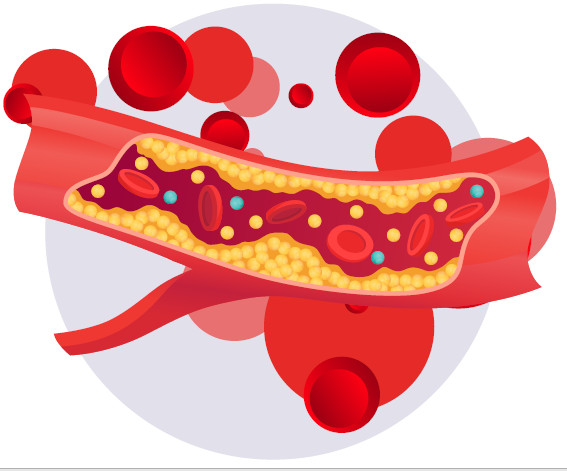
The main modifiable risk factors that cause atherosclerotic cardiovascular disease (ASCVD) are low-density lipoprotein-cholesterol (LDL-C) (and other apolipoprotein-B-containing lipoproteins), high blood pressure, cigarette smoking, and diabetes mellitus. LDL-C is the most abundant of the apolipoprotein-B-containing lipoproteins, and deposition of these atherogenic lipoproteins in the arterial wall leads to an inflammatory cascade and plaque formation. Continuous accumulation leads to plaque enlargement and the increased risk of a cardiovascular event. Lipid profile risk-assessment will be the focus of part one of this CPD article, while dyslipidaemia management and medication treatments will be the focus of part two.
The most recent of the ESC guidelines on dyslipidaemia, referred to as the ESC 2025 Focused Update, provides new and revised recommendations for the 2019 ESC Guidelines for the management of dyslipidaemias. More generally, the 2021 ESC Guidelines on cardiovascular disease prevention in clinical practice provides recommendations for the diagnosis and treatment of dyslipidaemia. The 2023 ESC Guidelines for the management of cardiovascular disease in patients with diabetes focuses on lipid goals and dyslipidaemia management in patients with Type 2 diabetes mellitus (T2DM).
Lipid profiles are obtained by blood test to evaluate for dyslipidaemia, as part of the risk assessment for cardiovascular disease, and for monitoring a patient’s response to lipid-lowering treatment. A typical lipid profile directly tests for, or calculates, the following components:
Once established, a lipid profile will form an important component in assessing an individual’s risk of having a cardiovascular event.
The current risk predictor algorithms used by the ESC are the Systematic Coronary Risk Evaluation 2 (SCORE2) and Systematic Coronary Risk Evaluation 2-Older Persons (SCORE2-OP). SCORE2 estimates an individual’s ten-year risk of both fatal and non-fatal CVD events (myocardial infarction, stroke) in apparently healthy people aged 40-69 years. Similarly, SCORE2-OP estimates the ten-year risk for fatal and nonfatal CVD events in apparently healthy people aged >70 years. SCORE 2, introduced in 2021, supersedes the older SCORE tool which estimated the ten-year risk of CVD death solely. By combining CV morbidity and mortality the newer SCORE2 tools better reflect the total risk of ASCVD. Apparently healthy people are those without established ASCVD, T2DM, or severe comorbidities. SCORE2 and SCORE2-OP can be accessed at escardio.org > Guidelines > Clinical Practice Tools > SCORE2 and SCORE2-OP calculators. The user selects either the low, moderate, high, or very high CVD risk country cluster (Ireland being moderate risk) followed by age, sex, systolic blood pressure, total cholesterol, HDL-C, LDL-C and smoking status inputs.
Importantly, the SCORE2 and SCORE2-OP risk-assessment tools apply to apparently healthy people only. SCORE2 and SCORE2-OP do not apply to persons with documented atherosclerotic cardiovascular disease or other high-risk conditions such as diabetes mellitus, familial hypercholesterolaemia (FH), or other genetic or rare lipid or blood pressure disorders, chronic kidney disease and in pregnant women. Special patient populations are dealt with separately within ESC guidance.
ESC guidelines have consistently pointed to the lowering of LDL-C as a cornerstone in the prevention of atherosclerotic cardiovascular events.
LDL-C is most commonly estimated from quantitative measurements of Total Cholesterol (TC), HDL-Cholesterol (HDL-C) and plasma Triglycerides (TG), using the Friedewald equation (see Figure 1).
Figure 1: Friedewald equation for estimating low-density lipoprotein-cholesterol (LDL-C)

While direct measurement of LDL-C is possible, using ultra centrifugal techniques, this is time consuming, expensive and requires specialist equipment. Importantly, the Friedewald equation to estimate LDL-C should not be used and is considered to be invalid if fasting TG levels are >4.5 mmol/L.
LDL-C treatment goals and the intensity of LDL-C lowering is based on a person’s risk category defined by SCORE2 / SCORE-OP, or other risk factors such as diabetes mellitus or confirmed ASCVD. These CV risk categories and treatment goals for LDL-C are summarised in Table 1.
Table 1: Treatment goals for LDL-C across cardiovascular risk categories
ASCVD, atherosclerotic cardiovascular disease; CKD, chronic kidney disease, DM, diabetes mellitus; T1DM, type 1 diabetes mellitus; T2DM, type 2 diabetes mellitus; FH, familial hypercholesterolaemia; LDL-C, low-density lipoprotein cholesterol; SCORE2, Systematic Coronary Risk Evaluation 2; SCORE2-OP, Systematic Coronary Risk Evaluation 2-Older Persons; TC, total cholesterol.
| LDL-C treatment goal | CV risk category | Risk definition |
| <3.0 mmol/L | Low risk | · SCORE2/SCORE2-OP <2% |
| <2.6 mmol/L | Moderate risk | · SCORE2/SCORE2-OP ≥2% and <10% · Young patients (T1DM <35 years; T2DM <50 years) with DM duration <10 years without other risk factors |
| < 1.8 mmol/L | High risk | · SCORE2/SCORE2-OP ≥10% and <20% · Markedly elevated single risk factors (TC >8 mmol/L or LDL-C >4.9 mmol/L or BP ≥180/110 mmHg · FH without other major risk factors · Moderate CKD · DM w/o target organ damage and duration ≥10 years or other additional risk factor |
| < 1.4 mmol/L | Very high risk | · ASCVD (clinical/imaging) · SCORE2/SCORE2-OP _20% · FH with ASCVD or with another major risk factor · Severe CKD · DM & target organ damage: ≥3 major risk factors; or early onset of T1DM of long duration (>20 years) |
| < 1.0 mmol/L | Extreme risk | · Patients with ASCVD and recurrent vascular events · Patients with polyvascular arterial disease |
Referred to as ‘good’ cholesterol, HDL lipoproteins help to transport cholesterol from the tissues and arteries to the liver, known as ‘reverse cholesterol transport’. Once delivered to the liver, cholesterol is taken up by a process involving hepatic lipase, broken down and removed from circulation. HDL is associated with a reduced risk of coronary heart disease and considered to be cardioprotective. Most recommendations advise HDL-C >1 mmol/L for men and >1.2 mmol/L for women. Furthermore, HDL-C has anti-inflammatory and anti-oxidant properties, which are also believed to contribute to its cardioprotective role.
Can HDL-C be too high? Unlike LDL-C, which shows a linear relationship with cardiovascular risk, HDL-C exhibits a U-shaped curve, where both too little and too much HDL cholesterol are associated with increased cardiovascular risk. A recent study in Copenhagen has demonstrated increased risk in men with HDL-C levels above 2.5mmol/L, with greater risk at above 3.0mmol/L. For women, cardiovascular risk increased when HDL-C was above 3.0mmol/L, with higher risk at above 3.5mmol/L.
Triglycerides are the most common type of fat in the body, the main form of energy storage and the main mode of energy transportation in humans (9 kcal/g fat). Oxidation of constituent fatty acids to CO2 and H2O releases energy.
Elevated TGs are an additive CV risk factor, independent of the risk caused by LDL-C. While there are no specific ESC treatment goals for TG levels, a level <1.7 mmol/L is considered to indicate lower risk. ESC guidance to reduce alcohol intake, reduce dietary carbohydrate intake and increase physical activity continue to be the recommended lifestyle modifications with the greatest magnitude and highest level of evidence to reduce TGs.
Regarding the advice to patients whether or not to fast before a blood lipid test, the ESC guidance states that studies comparing fasting and non-fasting samples have suggested that the difference is small for most lipid parameters, and indeed the benefits of better patient acceptability outweigh the limitations. As regards triglycerides however, most reported lipid profiles will show a reference value of <1.7mmol/L for fasting samples and <2.0mmol/L for non-fasting samples, and this is because non-fasting samples have a higher triglyceride level by approximately 0.3 mmol/L.
Non-high-density lipoprotein cholesterol is the total cholesterol (TC) minus the HDL-C. Non-HDL-C therefore encompasses all lipoproteins that contribute to atherosclerotic CVD. The ESC states that the relationship between non-HDL-C and CV risk is at least as strong as the relationship with LDL-C. Non-HDL-C is used as an input in the Systemic Coronary Risk Estimation 2 (SCORE2) and SCORE2-Older Persons (SCORE2-OP) risk algorithms. In the older SCORE calculators, TC was used as an input, but non-HDL-C is now considered to be more accurate.
ESC 2021 guidelines recommends the following goals for non-HDL-C:
Notably, the target goal for non-HDL-C is set at 0.8 mmol/L higher than the corresponding LDL-C target, thereby allowing for the triglyceride component of non-HDL.
Lipoprotein(a), often referred to as ‘Lp little a’, is like an LDL particle, but with an additional protein, apolipoprotein(a) attached. This protein imparts greater ‘stickiness’ inferring pro-atherogenic, pro-inflammatory and pro-thrombotic affects, with emerging data suggestive that Lp(a) may confer higher risk per particle than that of LDL-C. Lp(a) levels are 90% genetically determined and remain essentially constant throughout one’s lifetime and consequently do not fluctuate much relative to other lipoproteins. Therefore, Lp(a) should be measured at least once for every patient in their lifetime.
ESC guidance stresses that Lp(a) screening is particularly relevant in younger patients with FH or premature ASCVD and no other identifiable risk factors, or where there is a family history of premature ASCVD. If Lp(a) is not considered, then CV risk could be substantially underestimated.
Regarding CV risk, LP(a) levels <30 mg/dL are considered low risk. Risk increases slightly for Lp(a) in the range of 30 up to 50 mg/dL. Highest CV risk, and clinically relevant risk, is considered to be at levels >50 mg/dL. At least 20% of people of European descent are considered to have clinically significantly elevated Lp(a) levels (>50 mg/dL). Lp(a) blood tests are not routinely undertaken at GP level but can be requested through specialist referral.
References available on request.
About the author: Dr. Theo Ryan is a practising pharmacist in Errigal Pharmacy, Drimnagh (Vital Pharmacy group), and a lecturer in Pharmacy Practice in the School of Pharmacy and Pharmaceutical Sciences, Trinity College Dublin, where he is coordinator for the ‘Cardiology in Clinical Pharmacy Practice’ CPD course for pharmacists. The course aims to equip pharmacists with the requisite knowledge to optimise management of cardiovascular patients in both the hospital and community settings. Please contact cardioclinpharm@tcd.ie for course information.