



The last three years have brought much change to community pharmacy and the role of the community pharmacist, with the promise of much more to come. For recently qualified pharmacists, many of the processes and systems they covered in their undergraduate degree may have changed significantly or even disappeared and have been replaced by new services and IT processes. For current pharmacy students they may start their professional career in a paperless community pharmacy with an increased focus on service provision. Over these pages, Mo’ Tijani, Katelyn Briody, Franco Pruteanu and Mariam Henein reflect on their journey in pharmacy thus far, and their thoughts on the future of community pharmacy.
What influenced you to choose a career/degree in pharmacy?
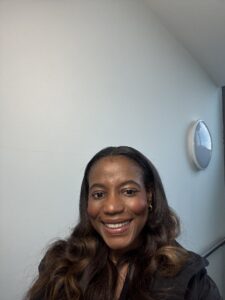
Growing up, I was always interested in science and understanding how systems worked but what really drew me to pharmacy was the balance between patient interaction and applying clinical knowledge. I was drawn to the idea of having a career where I could apply my scientific knowledge in a practical way and also support people through their healthcare journey. During my experiential pharmacy placement in community pharmacy, I saw how accessible pharmacists are to the members of the public and the level of trust these patients have in us as healthcare providers. Pharmacists are often the first point of contact for many patients, offering advice, reassurance, education and just a listening ear, and I found that aspect to be very rewarding. Over time, my interest in medicines and therapeutics developed further and this led me to complete a Masters in Clinical Pharmacology, which was useful in improving my understanding of drug pipelines, and everything else that goes on behind the scenes before drugs hit the market. Another influence was seeing firsthand just how much communication can make a huge difference in healthcare. A few years ago, I learned Irish Sign Language to help communicate with a patient I regularly interacted with in community pharmacy. That experience helped reinforce the importance of accessibility, communication and empathy within the pharmacy profession.
What were your favourite/most memorable subjects, or parts of your pharmacy degree?
Pharmacology was definitely in the top spot for me! I also really enjoyed the neurobiology, microbiology and pharmacovigilance modules. I particularly enjoyed learning how medications work in the body and how treatment decisions are made in real-life clinical situations. One of the most memorable aspects of the undergraduate degree was the experiential placements in community pharmacy. I enjoyed seeing how all the classroom learning translated into real-world practice. It was during those placements that I gained a greater appreciation for the huge responsibility that pharmacists have as professionals and the impact they have on patient outcomes. I also really enjoyed the interdisciplinary side of the course — communicating with other healthcare professionals, working through patient cases, and improving my problem-solving skills. Looking back, I can definitely say my pharmacy degree gave me a strong scientific foundation, and it also taught me teamwork, resilience and perhaps most importantly, the importance of lifelong learning, which are essential as a pharmacist because the profession is constantly evolving.
Did you have any challenges moving from your undergrad degree to working as a fully qualified and registered pharmacist, and how did you manage these?
One of the biggest (and perhaps most common) challenge was adjusting to the level of responsibility that came with being a qualified and registered pharmacist. As a student, you are supervised closely by your tutor pharmacist and senior members of the team, however, once you qualify, your colleagues and patients rely on your decision-making and judgement every day. That transition was a bit daunting at first. What helped me manage this challenge was learning from my experienced colleagues and accepting that confidence develops gradually through experience. I also focused on continuous professional development, identifying areas for improvement and studying in my free time. That further study helped strengthen my clinical knowledge and improved my confidence in clinical decision-making and patient-facing roles. I also think maintaining interests outside of pharmacy helped to sustain my work-life balance and prevent burnout. Teaching yoga and pilates has been a great outlet and has improved my communication skills, mindfulness, and my ability to connect with people from different backgrounds.
What elements of your role do you most enjoy now?
What I enjoy most is the patient interaction and the opportunity to make a meaningful difference to someone’s health and quality of life. I find the clinical side of pharmacy — reviewing medications, optimising treatment plans, identifying potential medication issues and working collaboratively with other healthcare professionals — quite enjoyable. I particularly enjoy the educational aspect of the role, whether that is counselling patients, supporting colleagues or helping people understand their medications and conditions. Communication is a huge part of pharmacy, and I find it quite rewarding when patients feel listened to and supported.
What elements of your job do you consider less rewarding?
Like many healthcare professions, pharmacy can involve a significant amount of administrative work, paperwork, and time pressures, which can sometimes take away from direct patient care. In addition, there are many occasions where pharmacists’ clinical skills are underutilised, particularly given the level of training and expertise within the profession. Pharmacists are well equipped to contribute significantly to preventative care, medication optimisation, and chronic disease management, so it is encouraging to see the profession continuing to evolve toward providing more patient-centred clinical roles. That said, even the more challenging or less-rewarding aspects of the job have helped develop adaptability, resilience, and organisational skills over the years.
What are your thoughts on the Community Pharmacy Agreement, and are there any elements that you think will be of particular benefit to you?
The Community Pharmacy Agreement 2025 represents one of the biggest reforms of community pharmacy in Ireland in years. For a long time, community pharmacists have been doing far more than simply dispensing medicines. Every day, we advise patients, identify prescribing issues, support chronic disease management, provide reassurance where needed and often act as the most accessible healthcare professionals in the community. In many ways, the agreement finally acknowledges that reality and begins to formalise the clinical role pharmacists already play. There are many positives in the agreement. The expansion of services such as common conditions management, vaccination, contraception services, and medicines optimisation gives pharmacists the opportunity to work more directly as clinicians. Professionally, that is very encouraging. It allows us to use our training and experience more fully, and it strengthens the positions of community pharmacy within primary care. The success of this agreement will depend not only on the services outlined on paper, but on whether pharmacies are properly supported to deliver them safely and sustainably. That means investment in staffing, technician support, training, digital systems, and protected time for clinical services. I think most pharmacists are willing to embrace a more clinical role — in fact, many of us welcome it. But we also want to ensure that patient safety, professional standards, and staff wellbeing remain central to how these changes are implemented. Overall, I see the Community Pharmacy Agreement as a positive and necessary step forward for the profession. It reflects the growing importance of community pharmacy within the healthcare system. But its long-term success will depend on genuine collaboration between pharmacists, pharmacy owners, the HSE, and policymakers to ensure the workload and resources are balanced appropriately.

What influenced you to choose a career/degree in pharmacy
My decision stemmed from a natural interest in the medical field along with guidance from my own community pharmacist and GP who both recommended pharmacy as a promising and rewarding career choice. The science subjects were my preferred throughout school and although I loved being in the labs, my preference leaned more towards a people-facing role and interacting with the public. Pharmacy is also such a great career in the options it provides after qualifying — if I ever decide that community pharmacy is no longer for me, I have a vast array of equally interesting and fulfilling job opportunities to choose from.
What were your favourite/most memorable subjects, or parts of your pharmacy degree?
I particularly enjoyed taking part in the 4th year research project which provided a chance for independent learning and gave a real taste of what it would be like to undergo a PhD. Getting to experience working with a post-graduate team in labs and exploring new and exciting areas of research still has me questioning potentially further studies in the future. I also always enjoyed the simulation labs which involved practicing difficult scenarios with actors as patients, which facilitated not only educational discussions between students and lecturers but also a bit of amusement when listening to the actors’ feedback.
Did you have any challenges moving from your undergrad degree to working as a fully qualified and registered pharmacist, and how did you manage these?
I found the first three-month period of working as a pharmacist the most challenging time, where maintaining concentration over longer days than I ever previously experienced left me exhausted each evening. Going from days of lectures where designated breaks are built in and your day is very structured, to an environment where I had to structure and prioritise tasks independently and unassisted was challenging. Communication with colleagues and setting assigned tasks between us, along with designating myself ‘brain breaks’ during the day has helped me overcome these issues. Additionally, the first few weeks/months demonstrate how essential Standard Operating Procedures are in helping this transition from pharmacy student to pharmacist — I will admit I was naive enough to not realise their importance while a student.
What elements of your role do you most enjoy now?
I love seeing how pharmacists are being utilised for various aspects of primary care in their communities. The increased uptake of services such as vaccination administration and the Common Conditions Service demonstrates the increased level of trust and appreciation the public are developing towards community pharmacy. I really enjoy conducting these consultations and having important conversations surrounding health and wellbeing with our customers. I have personally experienced one of our regular customers attending the pharmacy with red-flag symptoms associated with a heart attack. It was reassuring hearing that her first instinct was to present at the pharmacy where she trusted she would receive the care she required. I was able to sit with her to take her blood pressure, ring emergency services for her, and administer aspirin as a precaution. I was glad to assist her not only medically during this time but also provide her comfort and reassurance as a familiar and recurring healthcare professional in her life.
What elements of your job do you consider less rewarding?
It was difficult for me to answer this question and honestly think of any elements of the job that are of no use — most aspects of my daily routine feel useful to some degree. One component I feel could be improved is the administration burden on pharmacists. I feel like there could be a more streamlined digital way of conducting some of our daily processes, however this is already being addressed in the new Community Pharmacy Agreement. The modernisation of procedures such as a fully paperless prescribing process and the possibility of an electronic CD register is a step in the right direction and will hopefully lead to the further incorporation of new technologies.
What are your thoughts on the Community Pharmacy Agreement, and are there any elements that you think will be of particular benefit to you?
The regulatory changes to reduce levels of paperwork and administration already introduced have made a massive difference in freeing up my time to focus on other high-priority tasks.
I also love seeing the expanding role of pharmacists in sexual and reproductive health in particular, which I think is incredibly important and not focused on enough given the substantial role it plays in our overall health. Seeing initiatives like the Free Contraception Scheme and the National Condom Distribution Service highlight how this area is growing in primary care and I would love to see this possibly expanded in the future to areas such as the prescribing of contraceptive options by pharmacists and the free supply of female sanitary products, similar to the period product initiative in Scotland.
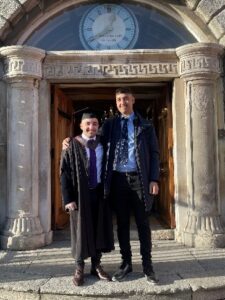
What influenced you to choose a career/degree in pharmacy Growing up I absolutely loved science. I also had a strong desire to help people. When I heard there was a degree where we could learn about how drugs work it really sparked my interest. Now I get to work with medicines and talk to patients every day.
What were your favourite/most memorable subjects, or parts of your pharmacy degree?
I enjoyed the majority of my time in college. The highlights of my time there were the practical labs. Many times, we were in patient-facing labs developing our communication skills and the next day we’d be in a chemistry lab isolating paracetamol. I also found our herbal pharmaceutical lectures fascinating, as they helped to bridge the gap between traditional remedies and modern-day therapies. All of the lecturers at RCSI were also fantastic to learn from.
Did you have any challenges moving from your undergrad degree to working as a fully qualified and registered pharmacist, and how did you manage these? I did experience a few challenges transitioning from student to pharmacist. I had experience working in multiple pharmacies while in college as an OTC person, technician, and locum technician and I enjoyed all of those roles. But when I first qualified there was a massive shift in perspective. I had experienced a new level of clinical responsibility that felt heavy on the shoulders. I had to rely on my training from the patient-facing labs, pre-registration placement, and most importantly I had the support of senior pharmacists that I am very grateful for.
What elements of your role do you most enjoy now?
I love working in a team alongside people who share a common goal of providing excellent patient care. We get to build long-term relationships with regular patients which is rewarding as you become part of their healthcare journey. I also enjoy helping out students as it reminds me of the mentors who guided me when I first started in pharmacy.
What elements of your job do you consider less rewarding?
I love my job; however, I find the clerical workload to be the least rewarding. Paperwork is extremely important but sometimes I feel that it can take time away from sitting down with a patient and providing clinical advice.
What are your thoughts on the Community Pharmacy Agreement, and are there any elements that you think will be of particular benefit to you?
I think as pharmacists we should be in a position to do more for our patients than currently possible. CPA25 is a great step in the right direction. The Common Conditions Service now enables us to prescribe for eligible patients which can potentially take some pressure off other overloaded healthcare providers. It would be great to see this service expanded in the near future for more autonomous prescribing and decision making. The free HRT and contraception initiatives are also a welcome addition, making these medicines more accessible for patients. I think that more investment in pharmacy is crucial for the future as the population increases, ages, and becomes more vulnerable. I am also a big believer that our technicians should be better financially supported and recognized in their roles so that we can keep talent in our community teams. They are crucial team members of pharmacy that are expected to keep up with new developments without much support.
What influenced you to choose a career or degree in pharmacy?
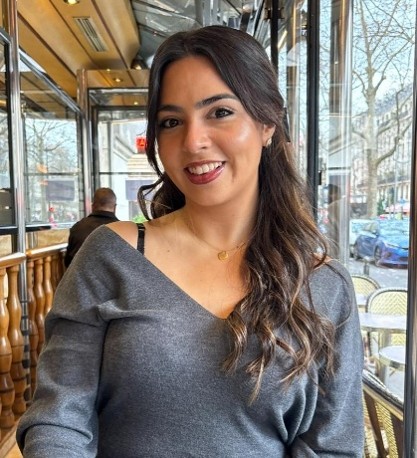
Studying pharmacy has been one of the most meaningful decisions I have made, both academically and personally. I was initially drawn to healthcare because for as long as I can remember, I always wanted a career where I could genuinely make a difference in people’s lives while still engaging with science and medicine. More specifically as a pharmacist, I get to combine clinical knowledge with communication and problem-solving skills in a way that has a direct impact on patients. I also liked the idea of being an accessible healthcare professional within the community and being involved in patient care on a daily basis.
What were your favourite/most memorable subjects, or parts of your pharmacy degree?
Looking back, one of the aspects I have enjoyed most throughout my studies is the variety of topics within the course. Subjects like pharmacology, therapeutics and practice of pharmacy stood out to me because they allowed me to bridge the gap between theory and real-life patient care. Learning how medicines work and how treatment decisions are made, made everything feel more relevant and connected to practice.
Do you anticipate any challenges moving from your undergrad degree to working as a fully qualified and registered pharmacist, and how would you manage these?
As I get closer to graduating, I have become more aware of the responsibility that comes with becoming a qualified pharmacist. As a student, there is always support available, but stepping into a professional role means making decisions independently and being accountable for them. I think adjusting to that level of responsibility, while also managing workload and maintaining accuracy in a busy environment, will be challenging. However, I feel that continuing to learn, asking for support when needed, and making the most of placement experience will help me adapt to this transition and prepare me for this new role.
What elements of being a pharmacy student do you enjoy the most now?
What I currently enjoy most about studying pharmacy is the sense of progress and purpose. Each year feels like a step closer to becoming part of the healthcare profession. There is also a strong sense of support among students, which makes the journey feel less overwhelming. I especially value the practical side of the course, particularly placements, where I can see the real impact pharmacists have on patients and the healthcare system and how it goes beyond our current studies.
Do you work in a pharmacy? If so, what elements of your job do you consider less rewarding?
Working in a community pharmacy alongside my studies has been one of the most valuable parts of my experience. It has helped me grow in confidence and improve my communication skills, while also giving me a realistic insight into day-to-day pharmacy practice. Although I find the work rewarding, I have also seen some of the challenges, such as the amount of administrative work involved and the frustration of dealing with stock shortages that are outside our control whilst doing our best to provide satisfactory patient-centered care.
What are your thoughts on the Community Pharmacy Agreement, and are there any elements that you think will be of particular benefit to you?
The new Community Pharmacy Agreement feels like a positive step for the profession and something that will shape the future of pharmacy in Ireland. It reflects a growing recognition of the role pharmacists play in healthcare and opens up more opportunities to be involved in patient care. I feel optimistic that these changes will allow pharmacists, including future graduates like myself, to contribute more meaningfully to primary care and work more fully within our professional scope.
This series will continue in the October and November issues of the IPU Review.