

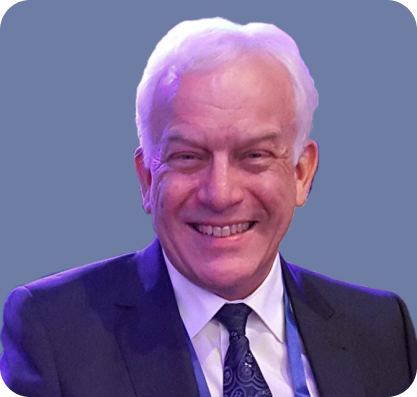

The last three years have brought much change to community pharmacy and the role of the community pharmacist, with the promise of much more to come. For recently qualified pharmacists, many of the processes and systems they covered in their undergraduate degree may have changed significantly or even disappeared and have been replaced by new services and IT processes. For current pharmacy students they may start their professional career in a paperless community pharmacy with an increased focus on service provision. Over these pages Aoife Murray, Toni Ejike Dalrymple-Hayfron, Kirsten Soney-Ituen and Salma Ibrahim reflect on their journey in pharmacy thus far and give us their thoughts on the future of community pharmacy.
Name: Aoife Murray
Job title: Community pharmacist
What influenced you to choose a career/degree in pharmacy?
I always enjoyed maths and science in school, and after completing a week of work experience in my local pharmacy, I knew it was a career I wanted to learn more about. I was particularly drawn to the combination of science and problem-solving with the opportunity to work directly with patients in the community. I liked the idea of having a healthcare role where you can make a meaningful difference to people every day.
What were your favourite/most memorable subjects, or parts of your pharmacy degree?
I always enjoyed the professional practice classes because they gave me a real insight into what my future career as a pharmacist would look like. They helped develop the communication and clinical skills needed to deal with patients in different scenarios and healthcare settings. I also liked how they allowed me to apply what I was learning in class to real-life practice.
Did you have any challenges moving from your undergrad degree to working as a fully qualified and registered pharmacist, and how did you manage these?
One of the biggest challenges has been adjusting to the level of responsibility that comes with working as a pharmacist. The transition was daunting at first, but I’ve learned the importance of using resources and supports available when dealing with unfamiliar or complex queries. Having a strong network of pharmacy friends and colleagues has also been invaluable, as we can support each other and share advice and experiences.
What elements of your role do you enjoy the most now?
I find it really rewarding to play a direct role in patient care and to be one of the first points of contact for patients when they have concerns about their health or medicines. Community pharmacists are in a unique position to provide accessible advice and reassurance, and I enjoy being able to help patients feel more informed and supported in managing their health.
What elements of your job do you consider less rewarding?
One of the more challenging aspects of the role can be dealing with medicine supply shortages, particularly when patients are understandably anxious or frustrated. These situations are often outside of the pharmacist’s control, but they require strong communication to help support patients and find suitable alternatives.
What are your thoughts on the Community Pharmacy Agreement, and are there any elements that you think will be of particular benefit to you?
As a newly qualified pharmacist, I am still becoming familiar with all aspects of the agreement and the changes it will bring. However, I think it is very positive that pharmacists will have opportunities to further expand their clinical role, particularly given the amount of interaction they have with patients on a daily basis. I also think the integration of e-prescribing into community pharmacy will reduce confusion that can arise with handwritten scripts that can sometimes be hard to decipher.

Name: Toni Ejike Dalrymple-Hayfron
Extra qualifications: MSc. Medicine (Clinical Pharmacotherapy)
Job title: Pharmacist
What influenced you to choose a career/degree in pharmacy?
People often ask me why I chose pharmacy. My answer usually gets a laugh: ‘I wanted the beauty of patient care but without the cutting’. The line is light-hearted, but it reflects a genuine truth. I was drawn to a profession where I could care for people, solve problems and make a meaningful difference without ever needing a scalpel — with full respect to the surgeons, doctors and theatre teams whose work is extraordinary. For more than 15 years, I practised pharmacy across South Africa in academic hospitals, community pharmacy and clinical research. Each setting shaped me differently. Hospital pharmacy sharpened my clinical thinking while research deepened my appreciation for evidence-based medicine. Community pharmacy however taught me the true meaning of human connections.
What were your favourite/most memorable subjects, or parts of your pharmacy degree?
In university, my favourite modules were pharmacology and pharmacy practice. Pharmacology fascinated me because it explained how medicines work while pharmacy practice brought everything back to the patient and the realities of daily care.
Did you have any challenges moving from your undergrad degree to working as a fully qualified and registered pharmacist, and how did you manage these?
The move from undergraduate study to fully qualified practice was both exciting and challenging. It meant shifting from the classroom learning to real-world responsibility where confidence, sound judgement and adaptability became essential. I managed by learning from experienced colleagues, staying open to feedback and trusting that each day of practice would build my confidence further.
Then I moved to Ireland.
Starting over in a new healthcare system was both exciting and humbling. After years of experience, I suddenly became ‘the new pharmacist’ again. I had to learn the intricacies of Irish pharmacy practice: new systems, regulations, patient expectations, reimbursement structures, and at times translating accents at lightning speed. The experience proved deeply rewarding, giving me a renewed perspective on healthcare and on myself. It reminded me that growth never truly stops in this profession.
I am delighted to be working as a supervising pharmacist with Uniphar. What stands out most is the organisation’s commitment to supporting staff development. Beginning again in a new country can feel overwhelming but support, mentorship and encouragement make all the difference.
What I value most about community pharmacy is the continuity of care. Pharmacists are often the most accessible healthcare professionals and at times the first people patients turn to when they are worried, confused, or simply seeking reassurance. Community pharmacy is not just about dispensing medicines; it is about building trust and relationships over time.
You watch families grow. You help patients understand complex treatments. You reassure anxious parents at 9.00am and calm stressed adults at 6.00pm. Some days, you are clinician, counsellor, educator and problem-solver before lunch.
What elements of your role do you most enjoy now?
What I enjoy most in my role is the variety: clinical problem-solving, patient counselling, medication reviews and building relationships with people over time. I value teamwork and the chance to make care more accessible in the community.
What elements of your job do you consider less rewarding?
The less rewarding side is the pressure: time constraints, medicine shortages, administrative work and the challenge of balancing clinical care with operational demands.
Despite these challenges, I remain passionate about pharmacy because, at its heart, the profession is about people. It is about being present during vulnerable moments and helping make healthcare more accessible, understandable and compassionate.
And honestly, there is something deeply fulfilling about improving lives every single day, all without ever needing more than a lancet.
What are your thoughts on the Community Pharmacy Agreement, and are there any elements that you think will be of particular benefit to you?
The evolving role of community pharmacy in Ireland is particularly exciting. The Community Pharmacy Agreement recognises pharmacists as an increasingly important clinical presence within primary care, expanding services such as vaccinations, the Common Conditions Service, contraception support and digital healthcare integration.
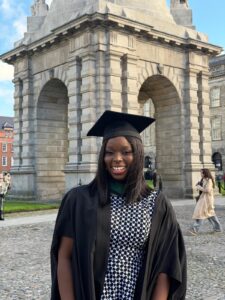
Name: Kirsten Soney-Ituen
Job Title: Community pharmacist
What influenced you to choose a career/degree in pharmacy?
I always wanted to work in healthcare; I enjoyed science in college and always preferred people facing professions. Pharmacy suited me because it was the bridge between the world of healthcare and the community, so I would get to experience snippets off both environments.
What were your favourite/most memorable subjects, or parts of your pharmacy degree?
Personally, I just loved pharmacology. Learning first how biological systems work and then how the medicines we dispense every day interact with these biological systems to bring about changes. Pharmacognosy fascinated me even more, striving to understand the mechanisms of medicines extracted from natural organisms and plants.
Did you have any challenges moving from your undergrad degree to working as a fully qualified and registered pharmacist, and how did you manage these?
Pharmacy is a unique degree in the sense that one day you are the student and the next day you are the leader. That was such a pill to swallow (pun un-intended) when I started my first day as a qualified pharmacist. Yes, although my eight-month pre-reg placement was the most vital and equipping part of my degree, the bottom line was you can never assume the role of a pharmacist until the day you get your number. Suddenly people were asking ME if meds could be taken together, or if they could sell codeine containing products. Now I was signing the CD reg, the daily audit and setting the plan at the beginning of the day. It was a big jump, but we had the resources to make that leap. It’s a matter of trusting yourself and knowing where and when to fill in your gaps with external sources. My number one advice is to utilise the community of pharmacists around you, between mentors and classmates, you won’t ever be short of help.
What elements of your role do you most enjoy now?
My favourite part without doubt is using my learning and knowledge as tools to help the people that come in looking for medical and healthcare advice. No matter how busy the day is, the words ‘can I speak to the pharmacist’ gives me a sense of purpose. And with every interaction I learn something new to apply to future cases and improve the level of quality care I provide with every passing day.
What elements of your job do you consider less rewarding?
To say something in my job is of no use wouldn’t be an accurate reflection of what we do as pharmacists. Yes, at times paperwork is tedious, monotonous and probably could undergo a process review, however the importance of record keeping and creating a paper trail cannot be ignored. Truly the only element of my job I consider less rewarding is standing up all day. Pharmacies genuinely need to make high chairs a legal requirement.
What are your thoughts on the Community Pharmacy Agreement, and are there any elements that you think will be of particular benefit to you?
I think the Community Pharmacy Agreement is evidence of the expanding role of pharmacists in both the community and as healthcare professionals. It encourages us to work at the top of our license, utilising more of our skills and capabilities, thereby increasing the public’s access to day-to-day healthcare. The introduction of the Common Conditions Service is probably one of the most notable changes, and something I believe is a necessary step in the right direction. As a recently qualified pharmacist it’s exciting to be entering the role as such breakthroughs are happening — one thing for sure though, although I’ve left university, the learning never ends and I wouldn’t have it any other way.
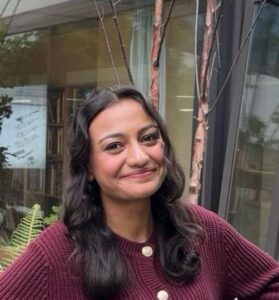
Name: Salma Ibrahim
College: Trinity College Dublin
What influenced you to choose a career or degree in pharmacy?
I grew up in Abu Dhabi and always liked maths and the science subjects I took at A level. When I moved to Dublin for my M.Pharm, I realised pharmacy lets me use that analytical side of my brain while actually helping people. I did not want a job where I just sat behind a desk. I wanted to talk to patients, solve problems on the spot, and feel useful. Seeing how community pharmacists in Ireland work made me think, yes, this is what I want to do. Above all, I wanted to help patients directly. The variety of areas a pharmacist can work in, like community, hospital, manufacturing and more, was also really exciting to discover.
What were your favourite/most memorable subjects, or parts of your pharmacy degree?
I really liked Pharmacognosy and Pharmaceutical Analysis. I got to work on a real research project where we extracted flavonoids from a plant to look for anti-inflammatory effects. That felt like proper science, not just memorising information. I also enjoyed the practice of pharmacy classes because they put me in patient scenarios to help me navigate through the real-life pharmacy world.
Do you anticipate any challenges moving from your undergrad degree to working as a fully qualified and registered pharmacist, and how would you manage these?
Yes, I do expect challenges. The biggest one is the jump in responsibility. As a student, someone always double checks your work. As a pharmacist, you are the last person before the medicine goes to the patient. My plan is to ask for help when I need it, stay close to my pharmacy friends and colleagues, and never pretend to know something I do not. That honesty has always worked for me.
What elements of being a pharmacy student do you enjoy the most now?
What I enjoy most is that my different roles finally feel connected. I work at Boots, I am the Secretary General of IPSA (Irish Pharmaceutical Students Association), and I volunteer with the NCODA (Network for Collaborative Oncology Development and Advancement), alongside my studies and research projects. All of that together makes the degree feel real. I love that I can still make mistakes without huge consequences, but I am also trusted to do actual work. It feels like I am already a pharmacist, just with training wheels on. And I like that no two days look the same.
Do you work in a pharmacy? If so, what elements of your job do you consider less rewarding?
Yes, I work at Boots and have worked at Lloyds (now McCabes) before. The least rewarding part is medicine shortages. You have a patient in front of you who is anxious or in pain, and all you can say is sorry, we do not have it, try another pharmacy. We cannot fix the root problem. I also find the time spent on stock management a bit draining. It has to be done, but it does not feel like healthcare. That said, dealing with shortages has taught me how to stay calm and communicate clearly when someone is upset and I have no good news for them.
What are your thoughts on the Community Pharmacy Agreement, and are there any elements that you think will be of particular benefit to you?
I think it is a good step forward, especially the Common Conditions Service letting pharmacists prescribe for minor conditions like UTIs. That feels like a real recognition of what we actually do. The move to e-prescribing will also help a lot, because handwritten scripts can be a nightmare. I am aware that the rollout is slow and that some parts, like funding and phased dispensing, have faced pushback. So I am hopeful, but not expecting everything to change overnight.