





An integrated approach to antimicrobial stewardship (AMS) in the community setting in Ireland is central to reducing unnecessary antibiotic use. All healthcare professionals have a role to play. AMS in the community cannot be a siloed effort. It requires integration across prescribers, pharmacists and nursing teams to reduce unnecessary antibiotic use in line with patient safety. The recently updated HSE AMRIC PCRS prescriber level reports deliver enhanced insights, clearer targets and new opportunities to optimise antibiotic use in community settings.
Understanding the AMS areas targeted in the new individualised GP report (as outlined below), enables community pharmacists to support and engage with prescribers more effectively. This will promote consistent patient messaging across community healthcare settings.
2026 target: 29% or less Red (see Image 1); and
Image 1: Preferred antibiotic use in the community Red Green table
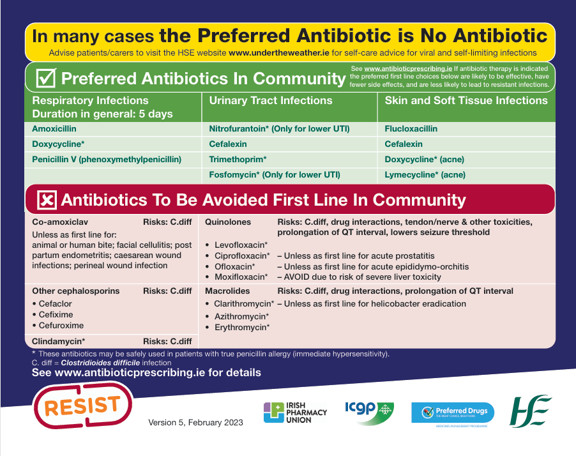
Source: antibioticprescribing.ie > Community Guidelines > Preferred antibiotic use in the community — Red Green Table.
2026 target: 10% or less.
The new report design provides GPs with actionable, data driven feedback at a quarterly frequency. A summary table (see Image 2) links quarterly antibiotic prescribing data to targets, peer comparison and actions.
Image 2: Key features of new prescriber antibiotic report
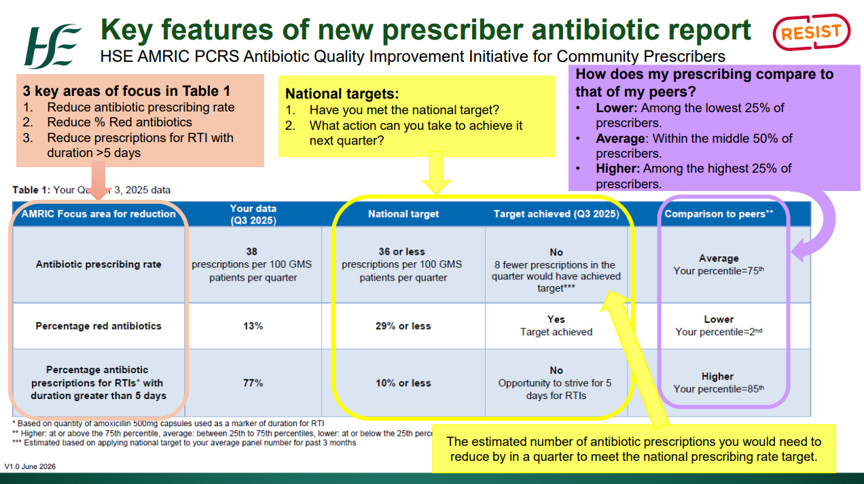
Source: HSE
In the new report design and based on feedback from GPs, quarterly data replaces annual aggregates. The three-year trend graphs allow GPs to better track change in their prescribing practice.
Another key aspect of the updated report is a strong focus on reducing prescribing of antibiotics in children aged 0-6 years. It is common for this preschool age group to have 10-12 viral infections yearly as their immune systems are still developing. These infections become less common as they get older. Antibiotics are not indicated in many of these viruses, often giving no benefit to the patient and can cause harm when unnecessarily prescribed. The new report tracks individual prescribers rate of antibiotic prescribing for this age group over time, alongside the national rate, allowing identification of variation and opportunities to reduce unnecessary prescribing.
Dr Edel Doorley, AMRIC GP Clinical Lead, says: “The updated AMRIC PCRS reports provides great data to reflect on my prescribing practices. It’s a great learning tool to ensure I am utilising HSE antibiotic guidelines and prescribing antibiotic appropriately in line with my peers. Within our practice we use it as a discussion tool to promote AMS amongst all GPs within the practice.”
In the months ahead, pharmacists will see increasing alignment between prescribing behaviour, patient expectations, and national AMS goals. Pharmacists can support and lead on AMS through their engagement with prescribers and patients in the community setting.
Dr Doorley emphasises the key role for community pharmacy in supporting AMS: “As a GP, I always value pharmacists supporting AMS within my local community, we share a common goal of wanting the best outcome for our patients and that includes appropriate antibiotic prescribing while minimising harm to patients. Community pharmacists are central to recognising evidence-based practices, empowering patients with important patient education and identifying opportunities to optimise antibiotic use. Their role is vital to promoting AMS and safeguarding continued effectiveness of these vital medicines for future generations. GPs and pharmacists working collaboratively in the community are key to reducing antimicrobial resistance (AMR) whilst optimising patient outcomes.”
Recommended actions for community pharmacistsEach quarter, the HSE AMRIC team shares educational updates with pharmacists via the Pharmacist Antimicrobial Stewardship Network (PAMS-net) and the IPU Newsletter. This ensures consistent, system-wide stewardship messaging. If you are not already a member, you can keep up-to-date by joining the PAMS-net (see QR code). Joining the network is simple and open to all pharmacists with an interest in responsible antimicrobial use.