


Home » Political report: Contraception hot topic before Dáil recess
There was another significant step forward in the expansion of pharmacy services delivered in advance of the summer recess, with legislation to include pharmacists as prescribers of contraception debated in both Houses of the Oireachtas. There was universal support for the measure from all who spoke on this legislation. Other items of note that arose before the recess, included the free HRT scheme, phased-dispensing, the cost of disposing unused medicines, and third-level healthcare courses.
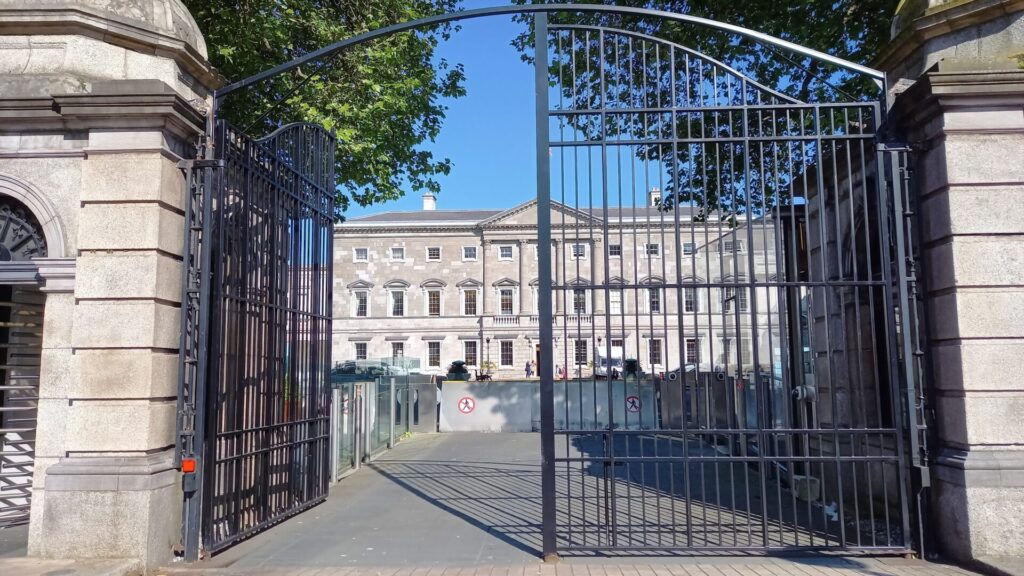
In July, the Government introduced the Health (Provision of Contraception Prescribing Service in Retail Pharmacy Businesses) Bill 2026. The Bill aims to include pharmacists as prescribers of contraception, enabling trained pharmacists to prescribe contraception in community pharmacies, thus offering patients a more convenient way to access contraceptive care without always needing a GP appointment.
The Bill was introduced in the Dáil and the Seanad by the Minister for Health, Jennifer Carroll MacNeill and the Minister of State for Public Health, Wellbeing and the National Drugs Strategy, Deputy Jennifer Murnane O’Connor.
Supported by all parties in the Dáil when it was introduced, Deputy Sorca Clarke (Longford-Westmeath, Sinn Féin) described the Bill as overdue and “a small step in the expansion of community pharmacy women’s healthcare services”. Other Deputies who spoke in favour of the Bill upon its introduction included Deputies Cathy Bennett (Cavan-Monaghan, Sinn Féin), Sinéad Gibney (Dublin Rathdown, Social Democrats), Jen Cummins (Dublin South Central, Social Democrats), Jennifer Whitmore (Wicklow, Social Democrats), Marie Sherlock (Dublin Central, Labour Party), and Brian Stanley (Laois, Independent).
During the Committee Stage debate on the Bill, some Deputies introduced amendments that they believed would strengthen the Bill further. Deputy Marie Sherlock called for an amendment to the Bill that would allow access to contraception to those under the age of 17, stating that “the age of medical consent is 16 and, so, the contraception scheme should be standardised to 16”.
Deputy Pádraig Rice (Cork South Central, Social Democrats) also introduced an amendment that would expand the eligibility for the scheme to older age groups. The Deputy also called for the Bill to make “oral contraception available without needing prescription”. While the Minister acknowledged both Deputies’ amendments, she stated that the Government was not able to accept either amendment “based on substantial clinical advice” from the HSE.
In the Seanad, the Bill was welcomed by a number of Senators including Senators Maria Byrne (Fine Gael), Teresa Costello (Fianna Fáil), Patricia Stephenson (Social Democrats), and Laura Harmon (Labour Party). During her contribution, Senator Stephenson asked for the Minister to commit “to ensuring that pharmacies are staffed and resourced in an appropriate way” to deliver this new service, and Senator Harmon reiterated the Labour Party position expressed in the Dáil by her colleague Deputy Marie Sherlock, that the free contraception scheme “should be extended beyond the current range of 17 to 35”.
During the Dáil debate on the Bill, Deputy Cathy Bennet (Cavan-Monaghan, Sinn Féin), Pádraig Rice (Cork South Central, Social Democrats), Ryan O’Meara (Tipperary North, Fianna Fáil), Aisling Dempsey (Meath West, Fianna Fáil) and David Cullinane (Waterford, Sinn Féin), asked the Minister to provide a statement on plans to extend the free contraceptive scheme to all ages. The Minister advised that “any decision relating to further expansion of the scheme will be considered through the Estimates process in advance of the annual Budget each year”.
Deputy Seán Ó Fearghaíl (Kildare South, Fianna Fáil) asked the Minister to outline the key measures taken to improve pharmacy services since January 2025 and her priorities for the rest of 2026. In her response, the Minister outlined the measures taken to strengthen and expand community pharmacy services through the Community Pharmacy Agreement 2025 and close engagement with the IPU, specifically mentioning the Common Conditions Service, the Contraception Service, Medication Optimisation Support Service, and vaccination services.
The Minister also shared a number of campaigns that she and her Department are planning on engaging with community pharmacies on, including the National Condom Distribution Service, Alcohol and Pregnancy Awareness, Men’s Health campaign, Winter Vaccination Campaign, and enabling the National Bowel Screening Programme through pharmacies.
Minister Carroll MacNeill also mentioned the importance of the new Medicines Disposal Service, legislation that is currently being prepared to enable greater electronic record keeping, and the establishment of the strategic collaboration group — a forum for dialogue and joint consideration on strategic issues shaping the future of community pharmacy in Ireland.
Following the introduction of legislation to allow pharmacists to prescribe contraception, Deputy Brian Stanley (Laois, Independent) asked the Minister for Health “if she will consider allowing pharmacists to administer HRT to women who have had their primary consultation and initial prescription with their GP”. Senator Nessa Cosgrove (Labour Party) also raised this issue.
The Minister advised that “pharmacists can extend prescriptions written for six months for up to a further six months,” including a prescription for HRT. She shared that the Expert Taskforce to Support the Expansion of the Role of Pharmacy’s recommendations included developing a model for pharmacists prescribing within primary and secondary care settings, and that the Common Conditions Service is an important milestone in this.
On access to HRT for women experiencing menopause and perimenopause, Deputy Jennifer Whitmore (Wicklow, Social Democrats) asked the Minister what steps are being taken to improve access. The Minister highlighted the initiatives that have been taken since the HRT measure came into effect on 1 June 2025, sharing that it is just one such measure that has been implemented to improve the experience of menopause for women in Ireland.
Phased dispensing and blister-packing continued to feature prominently in Dáil debates, with Deputy Pádraig Rice (Cork South Central, Social Democrats) asking the Minister for Health “if a patient who was receiving blister packs free-of-charge prior to the Community Pharmacy Agreement 2025 changes”, would continue to receive this service free of charge under the Government’s new scheme. The Minister advised that “all GMS (medical card) patients who were receiving phased dispensing can continue to do so”.
Deputy Claire Kerrane (Roscommon-Galway, Sinn Féin) also raised blister-packing, asking if the Minister was aware that “survivors of industrial schools who hold medical cards are being charged for the preparation of blister-packs”, and if she believed that such charges were appropriate, given their enhanced entitlement to healthcare. The Minister for Health advised that under the new patient-centred medicines optimisation support framework, “If a pharmacist determines that a medical card patient requires a blister pack for clinical or patient safety reasons, it will be provided without charge”.
The new GMS medicines optimisation support service was also raised by Deputy Pádraig O’Sullivan (Cork North Central, Fianna Fáil) who asked the Minister a number of questions, including asking for “the rationale for treating monitored dosage systems, commonly known as blister packs, as a last-resort option under the new service” and her response to concerns that patients in residential care settings will no longer receive blister packs free of charge.
The Minister responded by outlining that “the framework is designed to strengthen supports for medical card holders in vulnerable patient groups” and that “blister packs remain a last resort in-line with the international evidence due to associated risks including reduced patient autonomy and potential safety concerns”. She advised, however, that where clinically required and deemed appropriate, blister-packs will be provided free of charge to medical card holders.
Deputy Pádraig O’Sullivan (Cork North Central, Fianna Fáil) asked the Minister for Health “the number of community pharmacies participating in the Common Conditions Service” and if she could share the findings from the data collected through pharmacies to date.
The Minister shared that, as of May 2026, 1,827 pharmacies have signed up to take part in the service, accounting for 95% of pharmacy businesses in operation in Ireland. The Minister did not have data to share yet about the uptake of the service, but her Department is currently preparing a focus group to gain insights from pharmacists on the service.
The cost of disposing unused medications was raised in the Dáil by a number of Deputies, including Deputy Marie Sherlock (Dublin Central, Labour Party), who asked the Minister for ways in which an individual could return “unused medications or EpiPens without incurring a cost at a pharmacy”. Deputy Ken O’Flynn (Cork North Central, Independent Ireland) asked the Minister what the commencement date is of the national medicine disposal service, under the Community Pharmacy Agreement 2025.
The Minister advised that her Department, the IPU and the HSE are “currently engaged in finalising data evaluation aspects, including publication considerations, for the service” and a campaign to raise public awareness of the service through August.
In the Seanad, Senators held a debate on statements on Irish AIDS Day, which occurred on 15 June. During the debate, a number of Senators contributed include Senators Laura Harmon (Labour Party), Maria Byrne (Fine Gael), Tom Clonan (Independent), Teresa Costello (Fianna Fáil), and Maria McCormack (Sinn Féin).
The Minister for Health welcomed the opportunity to participate in this debate and noted her Department’s strong commitment to this area. She said the Department is continuing to expand access to, and investment in, the PrEP (pre-exposure prophylaxis) service. She also stated that she and the Chief Medical Officer, Professor Mary Horgan, are “determined to expand the role of pharmacy in prescribing PrEP”, and that this could be considered in the next phase of the Community Pharmacy Agreement.
The availability of third-level healthcare courses was raised by a number of Deputies in the Dáil with the Minister for Further and Higher Education, Research, Innovation and Science, Deputy James Lawless.
Deputy Shane Moynihan (Dublin Mid-West, Fianna Fáil) raised this with the Minister, who pointed to the expansion of healthcare education as one of his key successes since taking office. In particular, the Minister mentioned the new pharmacy programme in the University of Galway and the planned pharmacy programme in Atlantic Technological University, set to commence during 2026.
In the context of third-level healthcare places, Deputy Matt Carthy (Cavan-Monaghan, Sinn Féin) asked the Minister for Further and Higher Education if he or his Department had received any reports or analysis on the number of international students attending high demand courses, including in healthcare. The Minister advised that his Department does not hold these figures, but that “across all students enrolled in publicly funded higher education institutions in 2024/25, approximately 12% were non-EEA students”.
Deputy Seán Fleming (Laois, Fianna Fáil) raised regional workforce needs for HSE primary and community care services with the Minister for Health following projections published by the ESRI. Deputy Brian Stanley (Laois, Independent) asked a similar question of the Minister for Further and Higher Education about his Department’s engagement with the HSE to “manage the critical skills shortages in several key areas of the health system”.
In both their responses, the Minister for Health and the Minister for Further and Higher Education pointed to the Government’s investment of €28.5 million to support the delivery of more than 1,100 additional healthcare training places over the next three years, including in pharmacy.
Two Deputies asked about the availability of third level education places in specific areas: Deputy Albert Dolan (Galway East, Fianna Fáil) asked the Minister about places in Galway, while Deputy Thomas Gould (Cork North Central, Sinn Féin) asked the Minister about the number of students expected to enrol in Cork universities. On both occasions, the Minister outlined the number of students applying, advising that the Government is continuing to make investment to expand higher education in the healthcare sector.
Brian Harrison

Managing Director, MKC Communications
Highlighted Articles