

Home » Iron deficiency in pregnancy — how pharmacists can help
Iron is essential for the transport of oxygen around the body due to the critical role it plays in haemoglobin and red blood cell development. However, it is also critical to most cells and organ systems as it is an essential component of many proteins and enzymes, especially those involved in energy metabolism.
Symptoms of iron deficiency are not always apparent as the body uses its iron stores to protect erythropoiesis and haemoglobin production. However, symptoms of a more prolonged deficiency can include tiredness, weakness, dizziness, gastrointestinal upset, reduced immune function, a lack of energy and difficulties with concentration.
Iron deficiency typically presents in three key stages. The earliest stage is classified as iron depletion, due to a reduction in the body’s iron stores, indexed by decreased serum ferritin concentrations. This depletion can progress into iron deficiency, where iron stores have reached a critically low level resulting in an inadequate supply of iron for erythropoiesis, but without a marked decrease in haemoglobin concentrations. Prolonged depletion will lead to iron deficiency anaemia (IDA), presenting as a measurable decrease in the circulating red blood cell mass leading to decreased haemoglobin concentrations.
There are three main causes of iron deficiency; an inadequate iron uptake from the diet, elevated blood losses and/or increased iron requirements. Issues with iron uptake can be due to a diet lacking in iron-rich foods and/or an inability to absorb dietary iron, as is the case in conditions characterised by gut malabsorption.
It is important to note that there are two main forms of iron deficiency; absolute or nutritional iron deficiency and functional iron deficiency. Absolute deficiency occurs when iron stores and dietary intake are insufficient to meet the needs of an individual. This is particularly common when requirements for iron increase dramatically during periods of rapid growth and development, such as in pregnancy and early life.
A functional iron deficiency can occur despite adequate dietary iron intakes or large stores of iron in the body. However, the use and/or uptake of this iron is impeded, typically through the action of the iron regulatory hormone, hepcidin. During times of inflammation, hepcidin concentrations are elevated which prevents the body from absorbing iron. While inflammation is commonplace in certain disease states, this phenomenon has also been reported in more low-grade, chronic inflammation such as that seen in individuals with obesity.
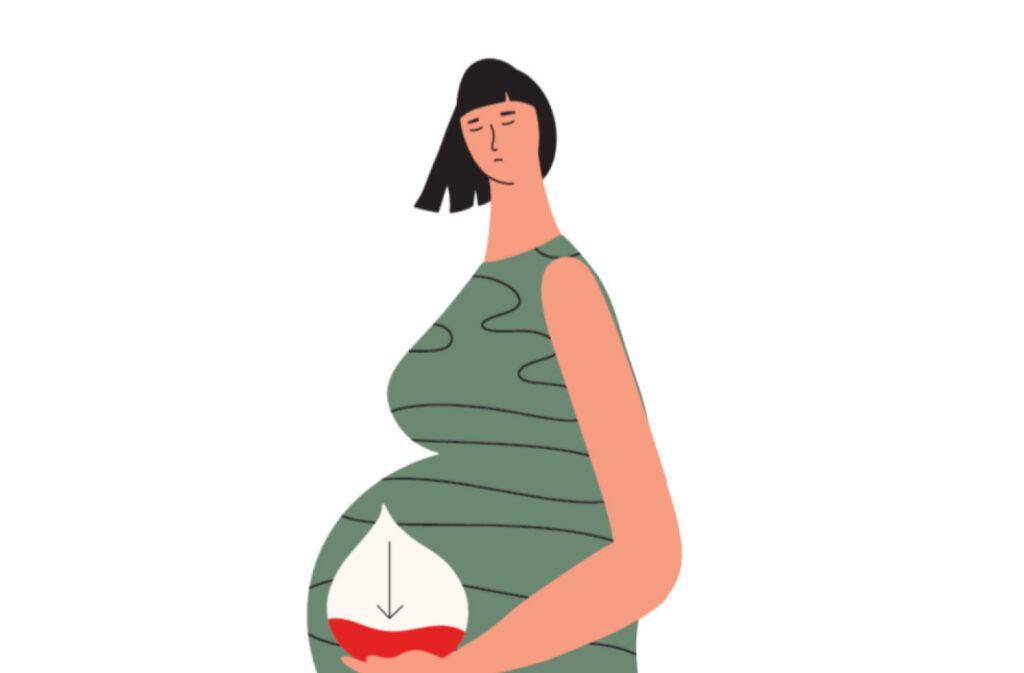
Iron requirements increase almost 10-fold during pregnancy, with the greatest demand seen during the third trimester to support the needs of both the mother and her growing child. While the body can make remarkable adaptations during pregnancy to increase the rates of iron absorption from the diet, meeting these high requirements remain a challenge for many pregnant women.
Poor dietary iron intakes and compliance with dietary guidelines are widely reported in the pregnant population. Perhaps more troublesome again is that European data suggests that almost half of women are iron depleted prior to ever becoming pregnant. This means that many women are on the back foot in terms of iron levels long before they ever become pregnant.
IDA during pregnancy can result in adverse pregnancy outcomes including preterm birth and a low-birth-weight baby. It also increases the chances that the baby itself will be born iron deficient. This is important as iron plays a fundamental role in the growth and development of a child’s brain. Iron deficiency during this critical period of early life brain development can result in poorer intelligence, low cognition, poor motor skills and behavioural problems that are often long-lasting.
In one of the largest studies in the world, researchers from the INFANT Research Centre and School of Food and Nutritional Sciences at UCC have shown that that four out of five pregnant women in Ireland are iron deficient by the third trimester. While previously considered a problem for women in low-resource settings, this study shows that iron deficiency is alarmingly common among pregnant women in a well-resourced setting like Ireland.
Interestingly, none of the women were anemic in the first trimester, yet rates of iron deficiency surged by the third trimester. Notably, these high rates were observed in a cohort of highly educated, generally healthy women, where almost 75 per cent of them were taking iron-containing (multivitamin) supplements that met the Irish and European recommended daily allowance for iron of 15-17mg.
In a recent follow-on to this study, the researchers report that iron deficiency in early pregnancy, even without anaemia, may be associated with lower language and motor development scores in children at two years of age. This new study sheds light on how iron deficiency, even in early pregnancy, matters for a baby’s brain development and reinforces the importance of greater awareness, early screening and supporting women throughout pregnancy.
Routine screening for iron deficiency is not part of standard antenatal care in Ireland or many other countries, and there is no universally agreed definition for iron deficiency during pregnancy. To date, screening has focused on the measurement of haemoglobin concentrations, which will only provide an indication of the presence or absence of anaemia. This is a problem as (1) iron deficiency isn’t the sole cause of anaemia and (2) there are functional health consequences of iron deficiency, even in the absence of anaemia.
Once a diagnosis of iron deficiency or IDA is confirmed, the aim of treatment is to replenish iron stores and if anaemia has developed, to return haemoglobin concentrations to normal. Pharmacists play an especially important role at this stage.
The first line of treatment involves oral iron supplements, typically in the form of ferrous sulfate, gluconate or fumarate. Multivitamin-mineral preparations usually contain too low a dose of iron to correct a deficiency and may contain other minerals, such as zinc, that can inhibit iron absorption.
Previous treatment guidelines proposed a daily dose of 100-200 mg elemental iron divided into multiple doses across the day. Following advancements, particularly in our understanding of the hormone hepcidin and its control over iron absorption, many recent guidelines recommend lower doses (40-80 mg) once daily or even intermittently, every second day. Improvements in haemoglobin concentrations should be seen within two to three weeks of effective iron treatment, but it may take three to six months of treatment for a complete replenishment of iron stores. IV iron may be needed to address severe IDA or in those where oral iron therapy is ineffective.
Compliance with oral iron supplementation strategies is extremely poor. GI side-effects are widely reported, in up to 75 per cent of users in some studies, and include diarrhoea, constipation, abdominal pain, nausea, flatulence and black stools. A deleterious effect of oral iron supplementation on the gut microbiota has also been proposed. Intermittent iron supplementation approaches have been proposed as particularly beneficial for pregnant women who experience these adverse side effects. For individuals experiencing constipation, increasing fibre and fluid intakes can also help to alleviate symptoms.
The absorption of iron is highly influenced by a series of promotors and inhibitors in the diet; therefore, the following advice should be remembered when recommending an iron supplement:
Don’t forget that many foods are good natural sources of iron or have been fortified with iron, including lean meat and poultry, beans and pulses, nuts and dried fruit, fortified breads and cereals. While diet alone cannot correct a deficiency, a diet rich in these foods should also be encouraged to any patients presenting with an iron deficiency diagnosis.
Researchers in UCC in collaboration with clinicians, dietitians and pharmacists in the HSE Ireland South Women and Infants Directorate have produced A Guide on Iron During Pregnancy, a free patient resource with helpful tips and recipes to improve iron intakes during pregnancy. This resource can be accessed online through the INFANT Research Centre website at infantcentre.ie or by contacting Dr Elaine McCarthy on elaine.mccarthy@ucc.ie.
The IPU Professional Academy Autumn 2025 webinar series covered the topic ‘Overview of Anaemia’, which is available to IPU members on playback at ipuacademy.ie.
Dr Elaine McCarthy

Senior Lecturer in Nutrition, School of Food and Nutritional Sciences in University College Cork (UCC); and Lead Investigator, INFANT Research Centre, UCC.
Highlighted Articles