


Home » Doping in sport: The role of intelligence and investigations in Ireland
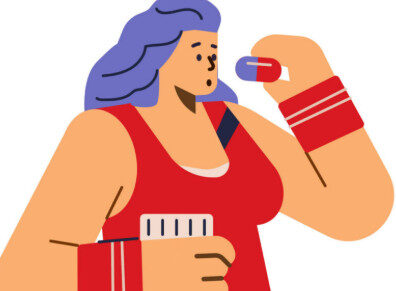
The term ‘doping’ in the context of sport usually refers to the use of prohibited substances and methods by athletes with the intention of improving their athletic performance.
According to the World Anti-Doping Code, developed by the World Anti-Doping Agency (WADA), a substance or method constitutes doping if it meets two of the three following criteria; It enhances performance, it presents a risk to the athlete’s health, it is contrary to the spirit of the sport.
The four main reasons why doping is considered detrimental to sport are as follows:
In addition to its detrimental effects on sport, Europol, the European law-enforcement agency made the following statement on the recent agreement of a Memorandum of Understanding with WADA:
“The illegal production and distribution of doping substances brings significant illicit profit to organised crime groups. They often use these profits to fuel other criminal activities, such as producing and trafficking illegal and substandard medicines and synthetic drugs. Doping substances not only corrupt fair competitions they also endanger the health of athletes as criminals often produce illegal doping substances in underground labs with no hygiene requirements while using dangerous and sub-standard raw materials. These illicit doping substances poison players in all sports: from track athletes, professional cyclists, skiers, and weightlifters to amateur bodybuilders.”
Whereas on a basic level, doping may be detected by testing an athlete for the presence of a prohibited substance or its metabolite in their body, WADA has specified eleven Anti-Doping Rule Violations (ADRV’s), of which only two may be directly detected by an adverse analytical finding (positive test). Other anti-doping rule violations relate to such acts as possession, trafficking, attempted use, tampering, prohibited association and complicity. WADA recognised that testing alone was not sufficient to combat doping in sport and addressed this by developing a dedicated Intelligence and Investigations Department. This Department has investigated some of the most serious doping scandals over the last number of years and now mirrors many of the advanced characteristics and capabilities of sophisticated law-enforcement agencies. The important role of intelligence and investigations in anti-doping has been formally recognised by WADA through the introduction of an International Standard for Intelligence and Investigations, which will come into force in 2027. This means that all anti-doping organisations who wish to be compliant with the WADA Code must in future have an effective intelligence and investigations capability.
In Ireland the National Anti-Doping Organisation (NADO) is Sport Ireland which operates on a statutory basis mandated by the Sport Ireland Act, 2015. This legislation recognises the importance of intelligence and investigations in the fight against doping by providing for the exchange of information between Sport Ireland’s Anti-Doping Unit, An Garda Siochána, Customs and the Health Products Regulatory Authority. Sport Ireland has also agreed an important Memorandum of Understanding and data sharing agreement with the PSI. Doping is not a criminal offence in Ireland and carries no legal sanction.
Sport Ireland has long since recognised the need for a dedicated intelligence and investigations capability and has an experienced Intelligence and Investigations Officer, who possesses a high degree of competence in this area, working within the Anti-Doping Unit over the last number of years. To prepare anti-doping organisations for the introduction of the new international standard, WADA has delivered international training in intelligence and investigations, and Sport Ireland played a central role in the delivery of this training.
Sport Ireland has for over 10 years operated a one-way confidential report doping web page, however as part of a continuous review process, the Anti-Doping Unit recently became aware of considerable enhancements in this area. Some of the most significant advances were developed by the RealResponse platform which uses WhatsApp and allows for a completely anonymous secure interaction between the person making the report and the organisation receiving it. The RealReponse platform eliminates the issue of one-way reports, which may contain valuable information but cannot be further investigated by Sport Ireland as there was no option to interact with the person providing the information. In addition, the use of WhatsApp facilitates ease of access to the reporting platform through scanning a QR code.
The RealResponse platform which has now been adopted by Sport Ireland, will assist in removing barriers to speaking out, thereby ensuring that concerns can be raised without fear. By amplifying the voices of those who wish to keep sport clean, RealResponse will assist Sport Ireland in reinforcing the message that protecting clean sport is a responsibility shared by athletes at all levels and everyone concerned about the integrity of sport.
The IPU National Health Products Catalogue has partnered with Medcheck.ie, which is an online service provided by Sport Ireland that allows athletes, and other interested parties, including healthcare professionals to check the status in sport of medicinal products purchased in the Republic of Ireland, against the WADA prohibited list.Michael Heffernan

Intelligence and Investigations Officer, Anti-Doping Unit, Sport Ireland
Highlighted Articles