Pregnancy is a time when many women want to know what they can do to keep themselves and their baby healthy. We know from our research that those planning to get pregnant and pregnant women are inundated with information and advice on all aspects of fertility and pregnancy from various sources. This can range from social media and ‘mumfluencers’ through to partners, family and friends. Alongside this, the culture in Ireland and misconceptions around alcohol use add to misunderstandings around pregnancy and alcohol. This overwhelm of information and at times conflicting points of view can be barriers to an alcohol-free pregnancy.
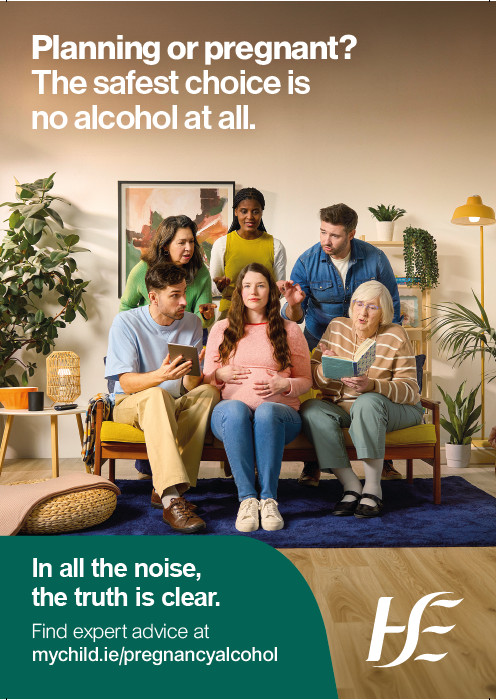
The HSE’s latest campaign is letting the public know that no alcohol at all is the safest when planning a pregnancy or pregnant. The campaign aims to assure women that not drinking alcohol during this time is safest for their baby and pregnancy, and calls on those around them to support them in this.
This messaging will be advertised in pharmacies and medical centres nationwide, throughout the year. Pharmacists, as a trusted source of health advice and information, have a key role in communicating this in a clear, non-judgemental manner within the safe, supportive environment of a pharmacy, where women can seek further expert advice if needed.
Background and context
Ireland has one of the highest estimated rates of prenatal alcohol exposure globally. It is estimated to have the third highest rate of Fetal Alcohol Spectrum Disorder (FASD) worldwide.
The World Health Organization (WHO) in 2023 advised that there is no safe limit of alcohol for health, and any level of consumption is associated with a risk of harm. This is especially true for alcohol at all stages of pregnancy, where consumption of any alcohol poses a potential risk to the developing fetus.
Prenatal alcohol exposure
When alcohol is consumed in pregnancy, the fetus is exposed to a substance that is ‘teratogenic’, meaning that it impacts fetal development with the potential to lead to lifelong adverse impacts.
Alcohol consumption during pregnancy can result in a range of complications, including:
- Increased risk of miscarriage and stillbirth;
- Premature birth;
- Low birth weight;
- Birth defects, particularly in the heart, kidneys, and facial structure; and
- Developmental delays, which may not become apparent until later in childhood.
Fetal Alcohol Spectrum Disorder (FASD) is caused by prenatal exposure to alcohol, that can affect both brain and physical development. The effects exist on a spectrum, ranging from mild to severe, and can result in a unique mix of impacts. While some physical or developmental differences may be present at birth, many only become apparent in later childhood or adolescence.
Early communications
During pregnancy and pre-conception women can receive a lot of information and this can be overwhelming. During this time, it is important that communication approaches are empathetic and non-judgemental so as not to cause distress. This is particularly for women who may have consumed alcohol before they knew they were pregnant.
By identifying alcohol use early in pregnancy, or ideally before conception, pharmacists can help prevent further exposure and reduce the risk of harm. Even if alcohol has already been consumed, stopping alcohol use at any stage in pregnancy will benefit the baby’s development. Health care professionals are encouraged to integrate discussions about alcohol into pre-conception care, early antenatal care, and health promotion delivered in pharmacy, general practice, and community settings. As partners and others around the individual also play an important role in supporting an alcohol-free pregnancy, they should be included in discussions where appropriate and with the consent of the mother.
Early conversations can:
- Empower women and their partners to make informed, healthy choices;
- Reassure women, if they have consumed alcohol, to stop as soon as they find outthey are pregnant;
- Reduce the risk of alcohol-exposed pregnancies;
- Support safer behaviours early in pregnancy; and
- Open opportunities to offer brief advice or onward referral.
“Pharmacists, as a trusted source of health advice and information, have a key role in communicating this in a clear, non-judgemental manner within the safe, supportive environment of a pharmacy, where women can seek further expert advice if needed.”
It is important that these conversations are non-judgemental and supportive. Given that around one in seven people in Ireland are estimated to have an alcohol use disorder, offering support or signposting when needed is a key part of routine care.
Approach to brief advice
Brief advice usually takes the form of a short conversation and may include discussion on the person’s alcohol use, benefits of reducing intake, and advice or support on stopping. These interventions are normally carried out opportunistically and typically take no more than a few minutes for basic advice, with the option of providing a leaflet or written information if time is more limited.
How to start the conversation
Referring to the HSE campaign might be useful and help to normalise the conversation. It is important to ensure the person is happy to continue the conversation and offer the privacy of the consultation room if they would prefer.
Opening a discussion about alcohol can be simple and non-judgemental, for example:
- “What have you heard about pregnancy and alcohol”; and
- “What are your thoughts about avoiding alcohol during your pregnancy?”
Frameworks for delivering brief advice
There is training available to guide and support the provision of brief advice. HSE training is currently available to support practitioners through:
- MECC (Making Every Contact Count): Training for MECC includes an online course and a workshop. The online course can be accessed on hhseland.ie. More information on MECC can be found on the HSE Website.This training can currently be accessed by pharmacists;
- SAOR (Support, Ask and Assess, Offer Assistance, Refer) Screening and Brief Intervention for Problem Alcohol and Substance Use. Training includes an eLearning module and one-day skills workshop. The eLearning module can be accessed on hseland.ie. More information on SAOR can be found on the HSE website; and
- Further learning – FASD Online Course — faast.ed.ac.uk.
If a woman is finding it difficult to stop drinking, signpost to appropriate supports. They can contact:
- Their GP, midwife or obstetrician for information and support;and
- The HSE provides a free Drug and Alcohol helpline staffed by counsellors who provide support, information, guidance and referral on anything to do with substance use and alcohol. It is available on 1800 459 459 from Monday to Friday between 9:30am and 5:30pm or you can email at any time on helpline@hse.ie.
A number of additional online resources are available to download on
healthpromotion.ie.
Pregnancy and alcohol poster
All pharmacies received a copy of the Pregnancy and Alcohol poster with their April issue of the
IPU Review. Additional copies can be requested at
healthpromotion.ie.