




The State of Health in the EU Country Health Profile 2025 for Ireland, published early in December by the OECD and the European Observatory on Health Systems and Policies, provides a timely and evidence-based overview of Ireland’s health status, the performance of the health system and developments in pharmaceutical policy. For community pharmacists, the report is particularly important as it reflects many of the realities encountered in daily practice, which inform the advocacy priorities of the IPU as outlined in the IPU’s Vision for Community Pharmacy.
Ireland continues to perform strongly on overall health outcomes. Life expectancy at birth was 82.9 years in 2023, exceeding the EU average by more than one year (see Figure 1). This reflects long-term improvements in care, prevention, and living standards. The report outlines that cancer and cardiovascular diseases accounted for over half of deaths in 2022. It is no surprise to see these areas of focus reflected in EU health funding, which is focused on addressing the burden of non-communicable diseases and, in particular, cancer and cardiovascular diseases (CVD). The EU Safe Hearts Plan and the recently reviewed European’s Beating Cancer Plan provide the focus for these two priority areas.
However, the Report also highlights that these positive outcomes are not experienced equally. A significant gap remains between income groups, with a 22 per cent difference in self-reported good health between the highest and lowest income groups. These disparities underline the importance of accessible, community-based healthcare services that can reach people where they live. Community pharmacies play a critical role in addressing such inequalities. With extensive geographic coverage and long opening hours, pharmacies often represent the most consistent point of contact with the health system, particularly in areas of disadvantage. This accessibility allows pharmacists to identify issues early; support medicine use and provide trusted advice to patients who may otherwise struggle to access care.
Figure 1: Life expectancy in Ireland in 2023 was over one year higher than the EU average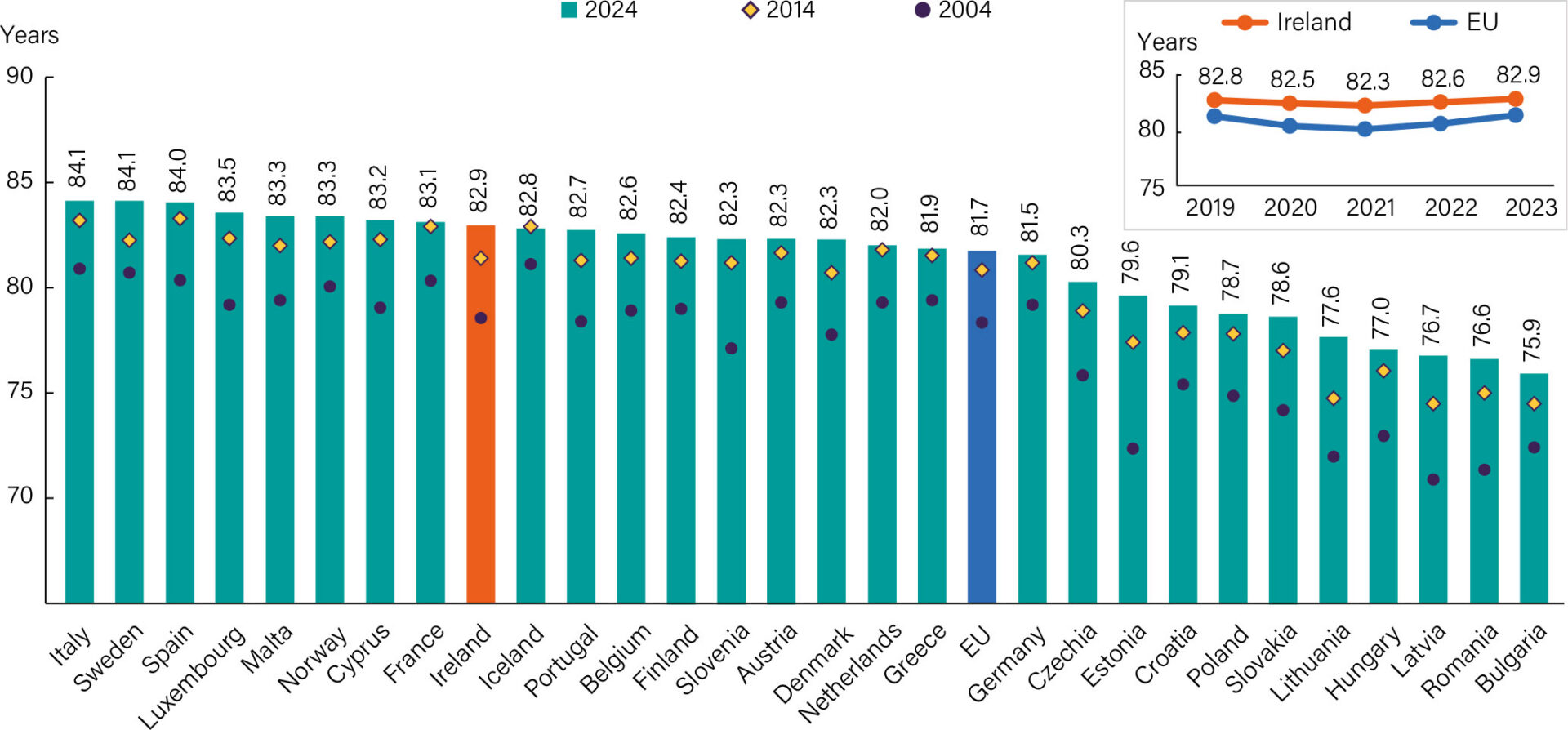
One of the most striking findings in the Report relates to respiratory disease. Despite strong performance in many areas, avoidable hospital admissions for chronic obstructive pulmonary disease and asthma are nearly double the EU average in 2023 (see Figure 2). This finding is particularly relevant to community pharmacy, as respiratory medicines are among the most frequently dispensed treatments and patients with asthma and COPD regularly attend pharmacies for advice and support.
Whilst the figures in the Report are not adjusted for disease prevalence across countries and Ireland has one of the highest asthma prevalence rates worldwide, there is a great opportunity to improve care through improved disease management. The IPU has consistently highlighted the importance of medicines optimisation in respiratory care. In this context, the IPU SABA initiative, developed through the Community Pharmacy Committee in collaboration with the Asthma Society of Ireland, is highly relevant. This health promotion campaign regarding the overuse of short-acting beta agonist (SABA) inhalers was informed by the Global Initiative for Asthma (GINA) Guidelines for Asthma Management and Prevention. This campaign highlights a crucial message to patients who are prescribed SABA reliever inhalers. It encourages them to avoid being over-reliant on their SABA inhaler, particularly if they are not using their inhaled corticosteroid (ICS) inhaler regularly. This initiative responds directly to the issues illustrated in Figure 2 and supports pharmacists to engage patients in improving asthma control.
The report also highlights trends in key risk factors. While smoking prevalence continues to decline, obesity among adults and children is rising. In 2022, 19 per cent of Irish adults were classified as obese, exceeding the EU average of 15 per cent. Whilst obesity in adolescents (20 per cent of 15-years olds were obese in 2022) is 1 per cent below the EU average, it has increased significantly from 12 per cent in 2002. The report further notes clear inequalities by education level, with higher prevalence among those with lower educational attainment. These trends reinforce the need for prevention, early intervention, and health promotion.
Community pharmacies already contribute significantly to health promotion through smoking cessation services, brief interventions, lifestyle advice and participation in national public health campaigns. The findings in the health profile strengthen the case for continued investment in pharmacy-based prevention and early intervention as part of an integrated primary care response. We see this role for community pharmacy reflected in the recent Community Pharmacy Agreement 2025 and in particular section 3.1, which outlines the community pharmacy’s role as a health and wellness hub and the application of the principles of making every contact count (see Image 1).
Figure 2: Admissions for asthma and COPD in Ireland are more than double the EU average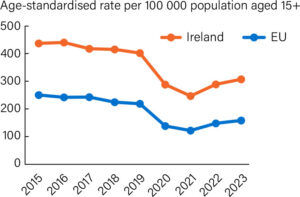 Figure 3: Participation rates in breast and cervical cancer screening in Ireland are above the EU average
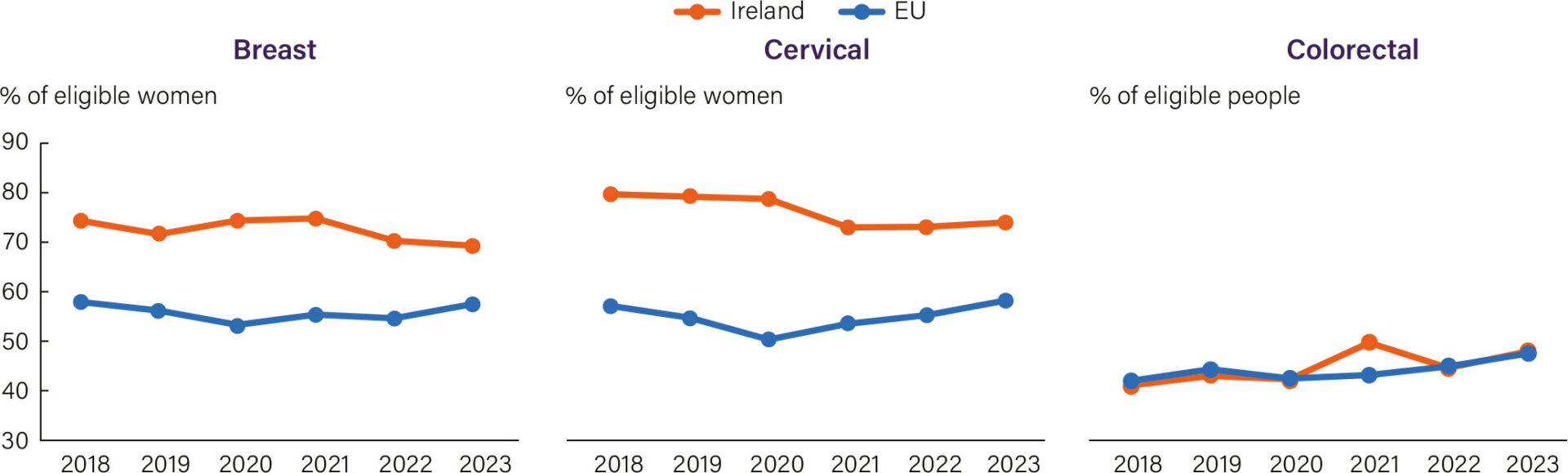
Cancer screening performance is another area highlighted in the Report. While Ireland performs well in breast and cervical cancer screening, participation in colorectal cancer screening is at the EU average but continues to lag behind national targets (see Figure 3).
Given that bowel cancer remains one of the most commonly diagnosed cancers in Ireland, improving screening uptake is a clear priority. Under the Community Pharmacy Agreement 2025, community pharmacists will take on an enhanced role in supporting the national BowelScreen programme. Working collaboratively with the HSE National Screening Service, pharmacists will raise awareness of bowel screening, support registration and assist eligible individuals to participate. This expanded role will hopefully further support the ongoing work of the HSE BowelScreen programme and increase awareness of its importance with the general population.
Access to care remains a recurring challenge across the health system. The profile reports that 5 per cent of adults experienced unmet medical need in 2024 due to cost, distance or waiting times, with unmet need particularly pronounced in primary care. In the case of primary care, this disparity reflects a combination of high out-of-pocket costs and limited access, especially for those not covered by means-tested or age-based entitlements (see Figure 4).
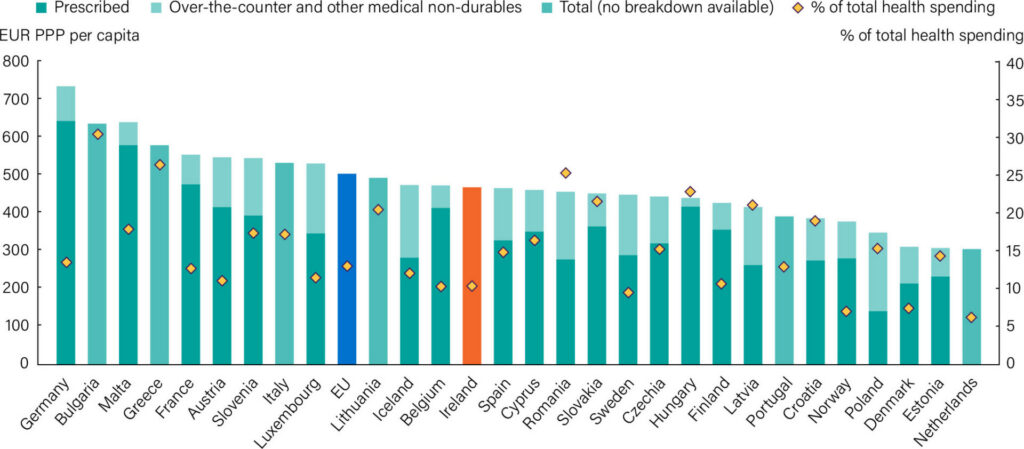
Figure 4: Unmet need for primary care in the general population in Ireland is higher than the EU average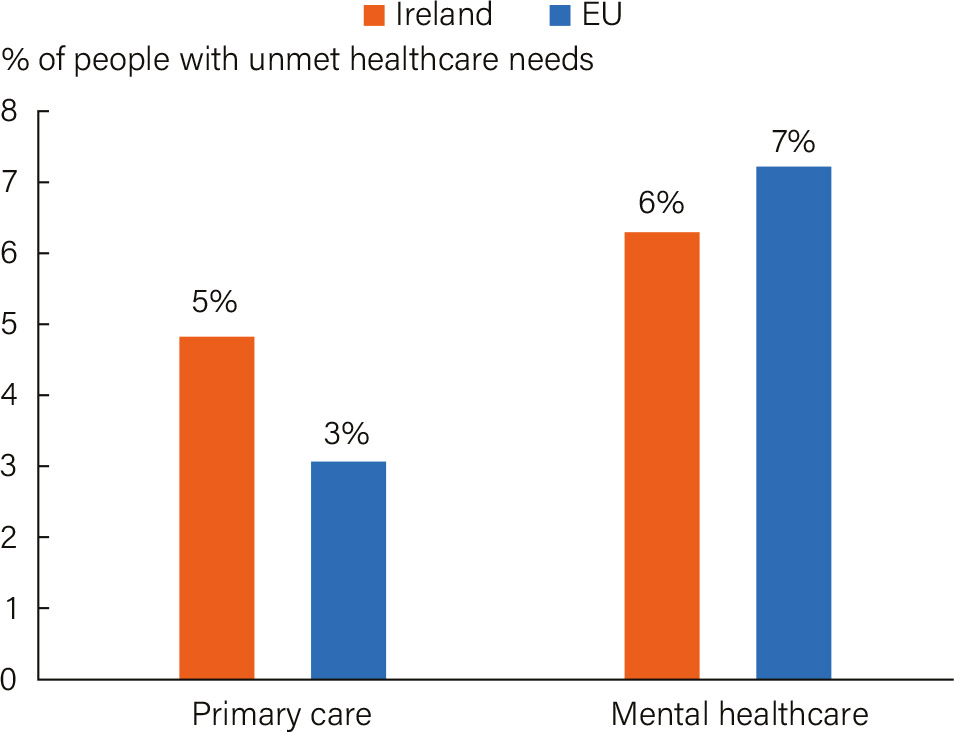 Figure 5: Ireland spends a relatively small share of its health spending on retail pharmaceuticals
These access issues are becoming increasingly visible to community pharmacists, who often see patients seeking advice when other routes are unavailable. Newly agreed pharmacy services, including the Common Conditions Service, directly address these gaps by allowing patients to consult with their pharmacist for a defined range of common conditions. By bringing care closer to home, such services respond to the access challenges highlighted in the report.
It is also noteworthy that the authors highlight that public funding covers 79 per cent of retail pharmaceutical expenditure in Ireland, substantially exceeding the EU average of 59 per cent. This is linked to the higher coverage from comprehensive HSE medication reimbursement schemes, including the Drugs Payment Scheme, Long-Term Illness Scheme, and General Medical Services cards, which provide free or capped medication costs for eligible populations. These statistics won’t come as a surprise to any pharmacy owners, as they will have seen more and more of their dispensing turnover moving towards the public schemes, which have taken away from the privately funded dispensing business. Interestingly, within the Report if mentions that the Department of Health has also initiated a long-term review of Ireland’s current eligibility and entitlement policies, with a focus on services delivered at primary and community care level.
Figure 6: The market share of generics in Ireland has increased by 50 % over the past decade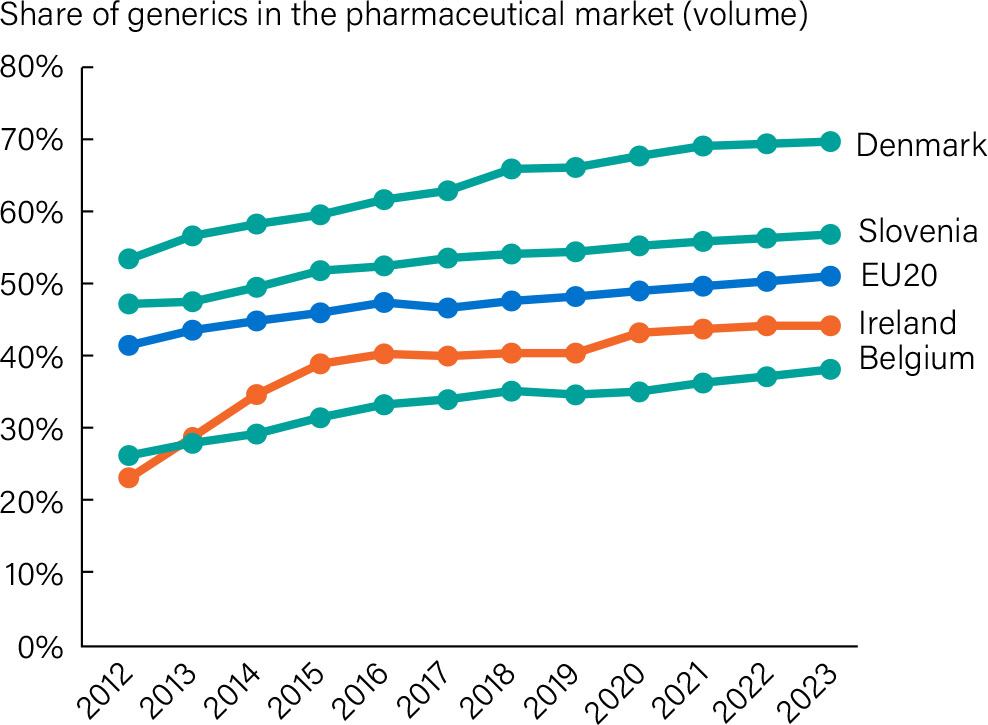
The report includes a detailed examination of pharmaceutical expenditure and affordability. Retail pharmaceutical spending in Ireland remains below the EU average Figure 5), reflecting long-standing cost containment measures, that we would have seen introduced with the Health (Pricing and Supply of Medical Goods) Act 2013. The ‘Spotlight on Pharmaceuticals’ section also highlights ongoing challenges in generic uptake and market share The Report states that; “The plateau in uptake rates since 2020 suggests that Ireland may have captured the most accessible gains under current policy frameworks, indicating that further progress toward EU-leading performance levels may require more comprehensive structural reforms, potentially including mandatory INN prescribing or enhanced financial incentives for pharmacies dispensing medicines.”
Community pharmacists play a central role in supporting cost-effective medicines use, promoting confidence in generics and helping patients understand their treatment options, so this observation from the Report authors is noteworthy for community pharmacists.
Taken together, the findings in the State of Health in the EU Country Health Profile 2025 strongly reinforce the direction set out in the IPU’s Vision for Community Pharmacy 2030 (see ipu.ie > News and Publications > Submissions and Reports). The Report outlines a clear pathway for community pharmacy as an essential partner for the health service to improve health outcomes, address inequalities, support access to care and ensure the effective and affordable use of medicines.
For IPU members, this evidence strengthens ongoing advocacy and confirms that the issues raised by pharmacists are firmly grounded in national and European data. It also reinforces the importance of continued engagement to ensure that community pharmacy is fully recognised and supported as a core component of a modern and responsive health system.