




Helping patients optimise the use of their medication safely and effectively is a fundamental responsibility of community pharmacists.
This month’s Medication Optimisation Update highlights a position statement on the Labelling of Dispensed Oral Medicines, published by the NPPG in the UK, and endorsed by the Royal Pharmaceutical Society. It also provides useful IPU resources related to the Common Conditions Service and includes further information on endometriosis and mental health resources.
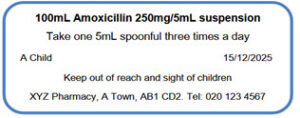
The Neonatal and Paediatric Pharmacy Group (NPPG) in the UK are a professional organisation specialising in the care of neonates, infants, and children. They have published a Position Statement on the Labelling of Dispensed Oral Medicines for Children, endorsed by the Royal Pharmaceutical Society, which offers useful insights and guidance on the labelling of medicines in the pharmacy (the statement can be read in full at ppg.org.uk > Resources > Position Statements). Key elements of the Statement are:
Example:
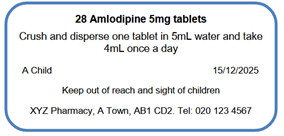
Additional key safe practice measures for oral liquid medicines:
Example:
It is expected that by the end of March 2026, there will be over 1,800 community pharmacies providing Common Conditions Services (CCS) to members of the public.
The extended pharmacy team, including medicines counter assistants (MCA), over the counter (OTC) staff, and pharmacy technicians, play a vital role in informing patients about the service, initial patient assessment and when necessary, onward referral to the pharmacist for provision of the CCS.
To ensure the effective provision of the CCS and information on the CCS to patients, the IPU have developed a suite of resources for pharmacy teams available at the IPU Common Conditions Service Hub.
The resources available from the IPU also include e-learning training on ‘Common Conditions Service for the Pharmacy Team’. This course is available from the IPU Professional Academy at ipu.ie > Academy.
Please note that this course is free If you or the pharmacy you work in are an IPU member. For more information on how to enrol in this course, please visit the IPU Professional Academy website.
Useful reference sources**
The IPU Professional Academy covered the topic ‘Endometriosis and Polycystic Ovary Syndrome’ in the Spring 2025 webinar programme. This webinar is available to view via the IPU Professional Academy LMS.
A range of resources are also available on this topic via the LMS.
The Endometriosis Association of Ireland (EAI) is Ireland’s national endometriosis organisation. Their purpose is to support and represent those impacted by endometriosis, by empowering the patient and advocating for change. The EAI supports its members by raising awareness, providing up-to-date information and advocating for best practice in related healthcare policy. See endometriosis.ie.
The Royal College of Obstetricians and Gynaecologists [UK] provide a range of patient information leaflets on their website, rcog.org.uk > For the Public > Browse our patient information > Endometriosis.
The European Society of Human Reproduction and Embryology [ESHRE] updated their guidelines on the management of endometriosis in 2022. This guideline offers best practice advice on the care of women with endometriosis, including recommendations on the diagnostic approach and treatments for endometriosis for both relief of painful symptoms and for infertility due to endometriosis. See eshre.eu > Guidelines > Endometriosis.
Many people may struggle with mental health issues. They may not know how to switch off from their work or may feel low and do not understand why. The HSE has social media assets available through yourmentalhealth.ie to support members of the public suffering from mental health issues. Pharmacists may find these resources helpful when counselling patients, whether they present with prescriptions or seek general wellbeing advice.
**Note: External references are provided for information purposes only. The IPU takes no responsibility whatsoever for the accuracy of the contents of, or information contained in, these references. Neither does the IPU make any representation that the information contained at the link is appropriate or suitable for use in an Irish community pharmacy setting, or that it complies with any legal or regulatory requirements as they apply to community pharmacy practice in Ireland. Pharmacists should ensure that in all cases they use their own independent professional judgement, taking into account the individual circumstances that apply for their patient(s) and practice setting.