


‘Brain fog’ is a term patients use every day, capturing the lived experience of thinking that feels slower, muddier and less reliable than usual. Academics and clinicians might refer to this as cognitive dysfunction, but brain fog remains a useful umbrella for a cluster of symptoms that often occur together.
Crucially, brain fog is not a diagnosis, disease or disorder. It is a sign — a signal that something is amiss. It may reflect an underlying health condition, a side-effect of medication, hormonal changes, dietary issues or lifestyle choices and for many it is the consequence of several factors layered together.
For pharmacists, brain fog sits at the intersection of medicines, health literacy and self-management. It can affect adherence, safety and confidence, and it can be frightening — particularly for midlife women who worry that brain fog means dementia. The helpful reframe is this: brain fog is often temporary, often improvable and often a prompt to look for modifiable contributors.
Most of us experience ‘foggy’ thinking occasionally — when jet-lagged, run down, sleeping badly or experiencing ongoing stress. With brain fog, the difference is persistence: symptoms occur regularly, interfere with quality of life and relationships, and may impact a person’s ability to do their job.
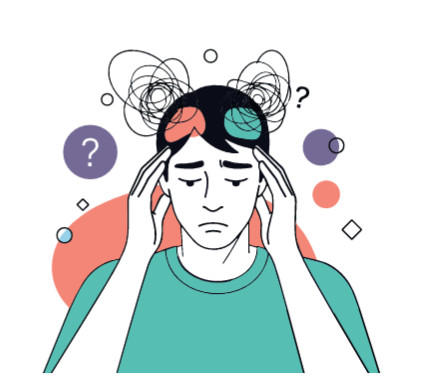
Brain fog can involve attention, executive function, memory, processing speed, language and even spatial navigation. Patients often say they no longer feel like themselves or that they feel, ‘slower’, ‘not as sharp’, ‘forgetful’, or simply unable to think clearly.
There are multiple causes and for many affected it may be the consequence of multiple factors.
Underlying health conditions commonly associated with brain fog include autoimmune conditions such as lupus, Sjögren’s syndrome and rheumatoid arthritis, chronic pain conditions such as fibromyalgia (often referred to as ‘fibro fog’), inflammatory diseases such as Crohn’s disease, serious infection such as sepsis or COVID-19, some cancers, depression and neurological diseases such as multiple sclerosis.
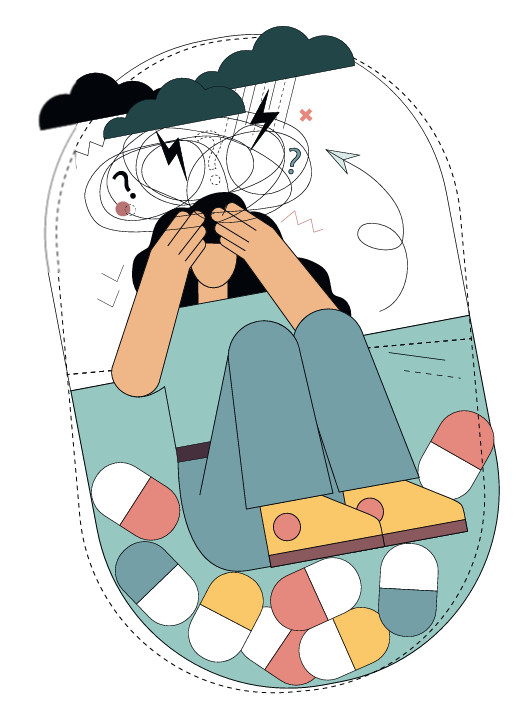
Medication side-effects are a frequent contributor and are particularly relevant in pharmacy. Many medicines used to treat the conditions named above can cause or exacerbate cognitive symptoms. In addition, several over-the-counter medications including pain killers, anti-histamines, anti-nausea medicines and some anti-depressants can interfere with cognitive function. Chemotherapy is well recognised for its cognitive effects (‘chemo brain’ or ‘chemo fog’). More broadly, any medications that act on the central nervous system can influence cognition, especially when sedating effects accumulate.
Hormone change or imbalance can also play a role, directly and indirectly. For women, brain fog can be more noticeable during PMS, pregnancy and menopause, particularly when sleep is disrupted by a bump or hot flushes. Other hormonal and metabolic contributors include hypo- or hyperthyroidism and type 2 diabetes.
Dietary issues can underpin brain fog too, particularly deficiencies in vitamin B12, iron (anaemia), folate and omega-3.
Lifestyle factors often act as primary drivers or amplifiers: sleep deprivation, poor sleep quality or disrupted sleep, poorly managed chronic stress (or, interestingly, too little stress), lack of physical exercise and lack of mental stimulation.
Finally, it is worth noting that the pandemic has seen an explosion in brain fog complaints — either as a direct consequence of COVID-19 (brain fog is common in long-COVID), or as a knock-on effect of pandemic measures that interfered with sleep, stress, diet and social connection.
Brain fog tends to show up as a pattern across several cognitive domains. People may struggle with executive function — trouble concentrating or thinking clearly, difficulty making decisions, solving problems or making plans, feeling unusually disorganised, or finding it harder to cope with more than one task. Attention can feel fragile, with a shorter attention span and difficulty focusing.
Processing speed commonly slows: thinking feels sluggish, it takes longer to process information and formulate a response and learning new things can feel effortful.
Memory issues can include increased forgetfulness, difficulty holding on to pieces of information (for example a phone number long enough to use it), issues with verbal memory (remembering a conversation) and visual memory (remembering an image), or problems learning new skills such as a new remote control or a new procedure at work.
Language can be affected too — trouble finding the right word, substituting the wrong word, or noticing that language feels less fluent or rich than usual.
Spatial navigation can also be affected with some people reporting ‘clumsiness’, bumping into things, dropping things, or over spilling cups or glasses
These are symptoms all of us experience occasionally. With brain fog, however, they are persistent, occur regularly and interfere with everyday life.
Brain fog can affect anyone at any age, but as we get older we accumulate more chronic conditions that can contribute. It’s not inevitable. If you view brain fog as a signal that something is amiss and take action accordingly, you can often nip it in the bud.
Pre-COVID it appeared to affect more women than men, possibly because many autoimmune, inflammatory and chronic pain conditions disproportionately affect women. Disturbances in cognitive function related to hormones are also more commonly discussed in women because female sex hormones fluctuate across the ovulation cycle, during pregnancy and in perimenopause. Cognitive performance fluctuates across ovulation and across 24-hour and natural day–night rhythms. Research to date shows that both men and women are sensitive to hormonal changes. Having said that, when it comes to the impact of hormones on cognitive function, very little research in this area has been carried out on males which means it’s not possible to say definitively, but it is feasible that there are gender differences in terms of how hormonal changes influence cognitive function.
Oestrogen receptors are widely distributed in the brain. The hippocampus, the amygdala and the cerebral cortex all have oestrogen receptors. When sex hormones are released, they lock-on to these receptors, influencing how they and you function. In particular, thinking, memory, emotions and other cognitive processes can be affected. When this is paired with other factors such as sleep disruption, stress and certain medications, then the hormonal changes can represent a tipping point where the brain can no longer cope, and brain fog symptoms emerge.
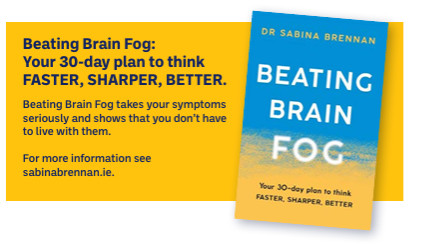
Yes — particularly to rule out or identify underlying health conditions and to review medication contributors. My book Beating Brain Fog is designed to help readers gather relevant information to take to their primary care practitioner with tips and assessments to support that process so that they can talk to their GP about the specific nature of their symptoms, rather than giving a more generic, ‘I feel foggy’.
Because brain fog is often multi-factorial, the most helpful approach is to match strategies to a person’s combination of symptoms and causes. That said, most people benefit from practical foundations: avoid multi-tasking, remove distractions (turn off radios, TVs and phone notifications), focus on what you can do, not what you can’t, and keep a stash of easy or repetitive tasks so you can still be productive when fog is bad. Aerobic exercise also matters — it enhances alertness and makes learning easier.
Equally important is avoiding catastrophising. One of the key reasons I wrote Beating Brain Fog was to assuage the fears of peri-menopausal and menopausal women who were convinced their brain fog was actually the early stages of dementia. Dementia is a neurodegenerative disease, whereas brain fog is often temporary and can improve with lifestyle changes or by addressing underlying causes.
Symptoms more consistent with a dementia presentation include:
The best long-term approach to eliminate brain fog is to adopt a brain-healthy life.
Cherish sleep — it is critical to get sufficient, good quality sleep each night. Manage stress, for example by devoting at least 30–60 minutes every day to having fun; laughter is nature’s natural stress-buster. Practise presence — be focused on what you are doing while you are doing it. Get physically active because your brain depends on a healthy cardiovascular system to function well. Finally, eat a brain-healthy diet and maintain a healthy weight. The most beneficial diet for brain health is a Mediterranean diet — colourful fruit and veg, oily fish and olive oil as the main source of fat.
If you strip it back, key steps are to cherish sleep and find your stress sweet spot. Brain fog can be unsettling and frustrating, but it is also often a prompt — an invitation to review health, medicines and lifestyle, and to take action.
About the author: Sabina Brennan (PhD., C.Psychol., PsSI) is a health psychologist, neuroscientist and author of four Irish Times best-selling books. Dr Brennan directed a dementia research program at Trinity College Dublin for several years, is a passionate advocate for people with neurological conditions and their carers, and has served on several advocacy and advisory committees, including the ‘All-Party Parliamentary Group on Longevity’, in the United Kingdom.