




Did you see the October IPU Review? A CPD article on the GINA Global Strategy for Asthma Management and Prevention was featured in the October IPU Review. It provided an overview of the update, with a focus on how it relates to Irish community pharmacy.
The Global Initiative for Asthma (GINA) collaborates with healthcare professionals, patient representatives, and public health officials worldwide to reduce asthma prevalence, morbidity, and mortality.
Our CPD article in last month’s IPU Review provided a summary of the 2025 update to the GINA Global Strategy for Asthma Management and Prevention. This month’s article will explore the value of asthma action plans and highlight practical tools and resources for supporting patients.
GINA has significantly revised its stance on the use of inhaled short-acting beta2 agonists (SABA) in asthma management. Historically, SABAs were widely used as first-line relievers for acute symptoms. However, GINA now discourages SABA-only treatment due to growing evidence of associated risks.
Key recommendations from GINA:
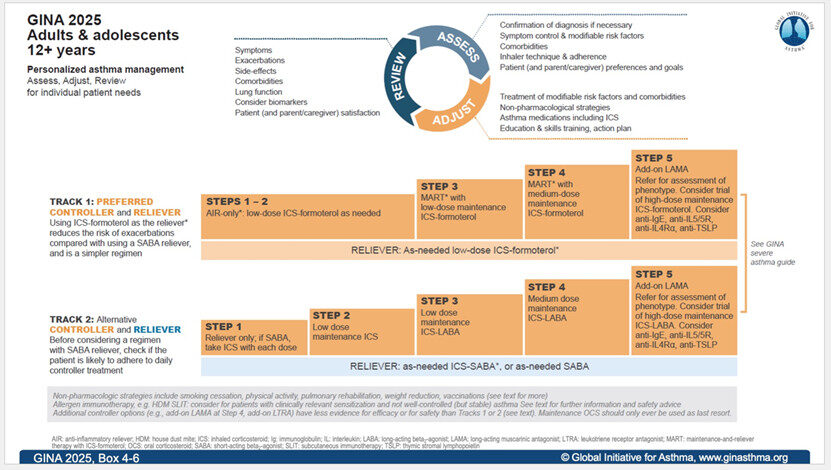
Critical appraisal:
Uncontrolled asthma symptoms increase the risk of exacerbations. Factors associated with increased risk, even in patients with few symptoms:
People with infrequent symptoms can still have severe, life-threatening, or fatal exacerbations.
The MHRA in the UK recently released a Drug Safety Update to remind healthcare professionals and patients of the risk of severe asthma attacks and increased mortality associated with overuse of SABA with or without anti-inflammatory maintenance therapy in patients with asthma. The update is available at gov.uk/drug-safety-update, and search for the title, ‘Short-acting beta 2 agonists (SABA) (salbutamol and terbutaline): reminder of the risks from overuse in asthma and to be aware of changes in the SABA prescribing guidelines’.
The EMA Pharmacovigilance Risk-Assessment Committee (PRAC) concluded in 2022 that changes were needed in the SPC and PL of SABA inhalers. The text was updated to include:
An audit carried out in a GP setting in Co. Tipperary in 2023, to check for compliance with the new GINA Guidelines, found that 62 patients (43 per cent) were prescribed ≥3 SABA inhalers per year (available at researchgate.net, conference paper, ‘An audit of prescriptions of short-acting beta-agonist inhalers among asthma patients in an Irish GP setting’).
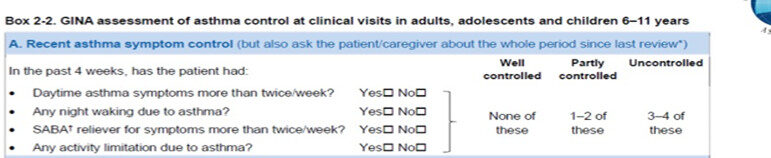
In the pharmacy setting, reviewing dispensing records to identify patients who have received three or more SABA inhalers in the past year can help flag those at increased risk of poor asthma control. Flagged patients could be invited for an asthma review to explore frequency of use, use of ICS or ICS-formoterol, inhaler technique, and other risk factors such as smoking or vaping status. Patients with signs of poor control can be referred for GP review. Pharmacists can play a key role by identifying patients who are not using their prescribed ICS or ICS-formoterol therapy and providing targeted education on the importance of inhaled corticosteroids in asthma control, as well as the risks associated with excessive reliance on SABA inhalers. Patients with signs of poor control can be referred for GP review.
Image 2: GINA assessment of asthma control and clinical visits in adults, adolescents and children 6-11 years
Pharmacists can assist patients in completing and updating their asthma plans, which include a green zone representing their daily medication and symptom-free routine, a yellow zone indicating early warning signs, and a red zone representing emergency symptoms and when to seek urgent care.
Image 3: Example of Asthma Action Plan
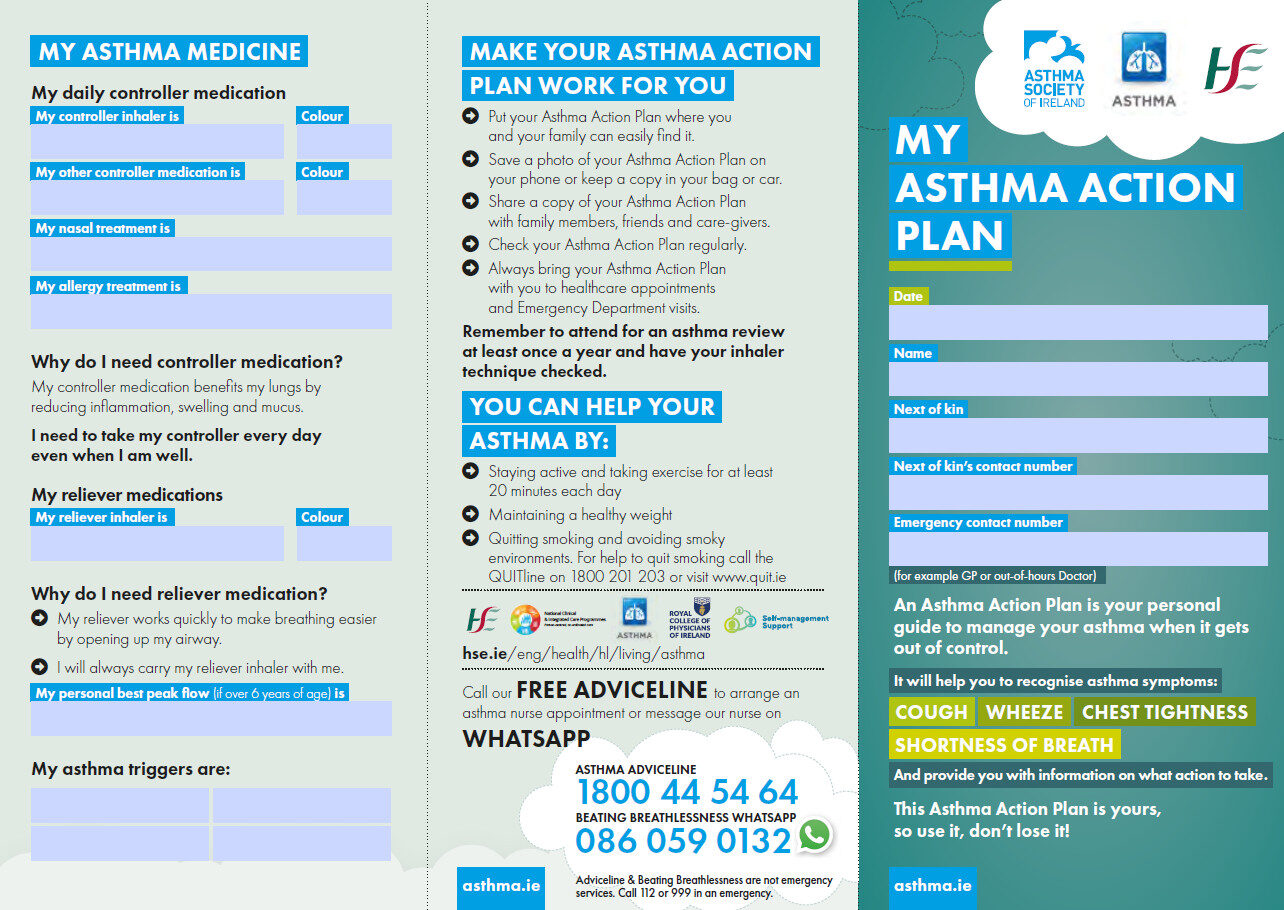
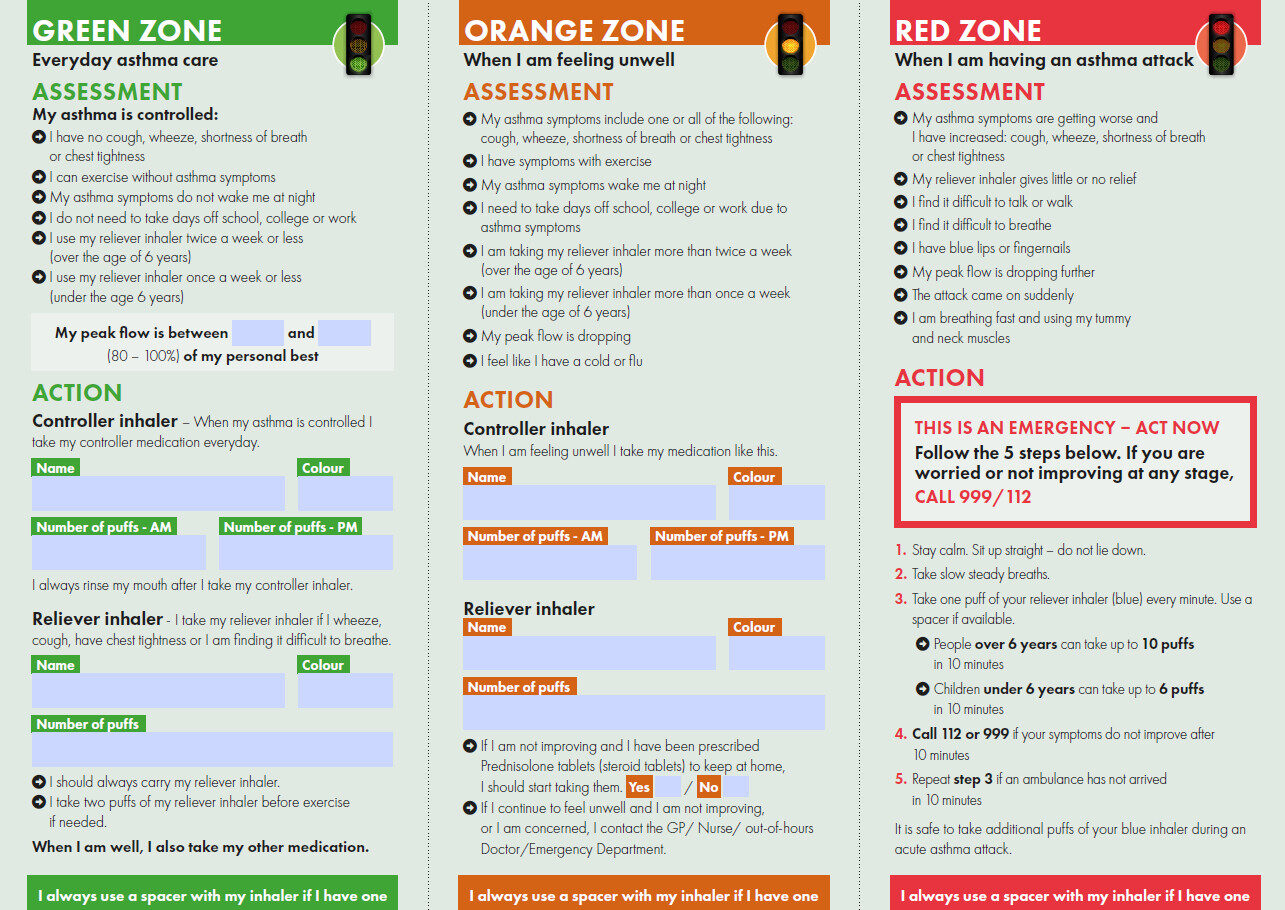
Source: asthma.ie
Pharmacists play a vital role in supporting patients with asthma to use their asthma action plans effectively. To enhance this support, pharmacy teams should review and develop accessible resources within their practice. This includes ensuring printed or digital copies of asthma action plans are readily available, offering brief consultations to help patients understand and personalise their plans, and integrating prompts into dispensing systems to identify patients who may benefit from a review. Staff training on asthma management and inhaler technique can further empower pharmacists to guide patients through their action plans confidently.
Collaborating with local GPs and asthma nurses to align messaging and follow-up care, and signposting resources available from the Asthma Society of Ireland, ensures continuity and reinforces the importance of proactive asthma self-management. The IPU Community Pharmacy Committee are running a health promotion campaign, in conjunction with the Asthma Society of Ireland, regarding the overuse of short-acting beta agonist (SABA) inhalers – please see the Medication Optimisation article for further information.